Frozen French Fries Manufacturers in India: How to Qualify a Supplier
Qualifying an Indian frozen fry manufacturer means verifying eight things in writing before price is discussed: installed capacity and current utilisation, the cuts actually in production, freezing method (IQF or block), certification documents rather than logos, packaging and private-label capability, reefer loading and cold-chain procedure, destination markets already served, and commercial terms. A supplier who cannot answer the first four should not reach the sample stage.
Published 2026-05-29, updated 2026-08-21 · FirstFry Export Desk · Sourcing & supplier qualification
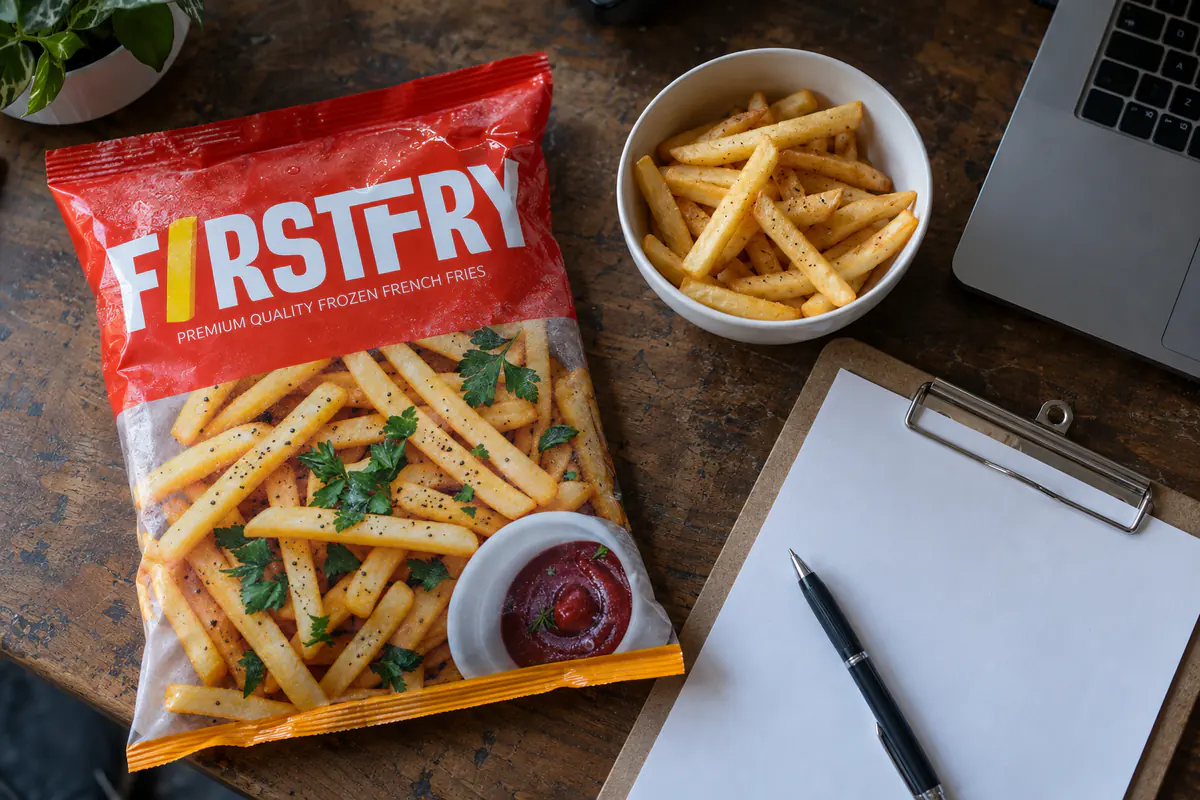
India has gone from a marginal fry origin to one of the fastest-growing exporters in the category, with frozen potato export volume crossing 180,000 tonnes in FY 2024-25 and Gujarat as the production centre. That growth has brought genuine world-class plants and a long tail of traders presenting themselves as manufacturers. Qualification is how you tell them apart, and it costs you nothing but a structured email.
First: is this a manufacturer or a trader?
Neither is inherently wrong — a good trader with a stable manufacturing relationship can serve a small importer well. But you need to know which you are dealing with, because it changes who controls your spec, your lead time and your recourse when a batch is off.
| Ask this | A manufacturer answers | A reseller tends to |
|---|---|---|
| Where is your plant and what is the line capacity? | A location and a tonnes-per-hour figure | Give a city, avoid the capacity number |
| Can we visit or take a video walkthrough of the line? | Yes, with a date | Defer, or offer photos only |
| Which cuts ran last month and at what volume? | Specifics | Answer with the full brochure range |
| Whose name is on the health certificate and certificate of origin? | Their own | A third party's |
Capacity and utilisation
Installed capacity is a vanity number on its own. What you need is available capacity in your buying window.
- What is the line's rated throughput in tonnes per hour?
- How many shifts are currently running?
- What share of output is already committed to existing programmes?
- What is the lead time from confirmed order to container gate-in, today?
- Is that lead time seasonal? Raw potato availability is, so the honest answer is usually yes.
Cut specification and grading
This is where most disappointments originate. "9mm fries" describes a cross-section, not a product. Get the full specification in writing:
If a supplier's sheet omits dry matter, coating detail or par-fry figures, they are quoting from a brochure rather than a process. Reading a frozen fry specification field by field covers what each row predicts on the plate, and which omissions matter most.
| Field | What to ask for |
|---|---|
| Cut dimension | Nominal size and tolerance, not just a nominal number |
| Length grading | Percentage of pieces above a stated length — this drives plate presentation and price |
| Defect allowance | Maximum percentage for dark ends, slivers, clumps and foreign material |
| Coating | Coated or uncoated, and if coated, what the coating is for |
| Oil type | Which frying oil is used in par-frying |
| Colour standard | The fry colour reference the plant works to |
| Pack | Bag size, bags per carton, net weight, carton dimensions, cartons per pallet |
| Shelf life and storage | Months from production, and the storage temperature it assumes |
Compare these sheets side by side before you look at price. We publish specifications for each cut openly for exactly this reason — the classic 9mm straight-cut fries page carries the cut, pack, shelf-life and storage detail a registration or a tender needs.
Freezing method: IQF or block
IQF — individually quick frozen — means each piece is frozen separately so the product pours free-flowing from the bag. Block freezing is cheaper and produces a frozen mass. For any foodservice customer who opens a bag, uses part of it and returns the rest to the freezer, IQF is not a preference; it is a requirement.
Ask directly: is this IQF, and what is the freezer type and dwell time? Evasion on this question is itself the answer. Then verify it on the sample — a genuinely IQF product that has held its chain pours; a block-frozen or chain-broken product arrives clumped.
The pour test on arrival settles it without equipment: correctly frozen fries flow loose from the bag, and blocks mean a thaw-refreeze somewhere in the chain. What IQF freezing does to a fry explains why that single check tells you so much.
Certification: ask for the documents
Every supplier website in this category displays a strip of certification logos. Logos are not evidence. Request, in writing:
- The certificate document itself, as a PDF
- The issuing body and the certificate number
- The scope — which facility and which product categories it covers
- The validity dates
- Any registration your own market specifically requires of the manufacturing facility
A supplier in good standing will share current documentation during qualification without friction. One who repeatedly promises and does not send is telling you something useful, early, at no cost to you.
Packaging and private label
- What bag and carton formats are available beyond the standard export pack?
- Can they print your brand, and at what minimum volume per SKU?
- Who is responsible for label compliance in the destination market — and will they produce the artwork to your market's rules or expect you to supply a compliant file?
- What is the artwork approval and film lead time? Printed film is often the longest item in a private-label schedule.
Container and cold-chain readiness
A plant that makes excellent fries and loads containers badly will still cost you a claim.
- Which port do they load from, and what is the inland leg to it?
- Is the container pre-cooled before loading, and how long does loading take?
- Do they fit a temperature data logger, and who receives the readout?
- What temperature set point goes on the bill of lading?
- How many transhipments will the routing involve? Each one is a plug-out risk.
Track record and terms
Two final areas, both of which are about risk rather than product:
| Area | Question | Why it matters |
|---|---|---|
| Destination experience | Which markets do you already ship to, and have you handled our market's registration? | Someone who has cleared your market before will not learn on your container |
| References | Can we speak to a buyer in a comparable market? | Willingness matters as much as the reference itself |
| Incoterms | Which terms do you offer for a first shipment? | Determines where your risk starts |
| Payment terms | What is acceptable for order one versus order five? | Advance-only on a first order is normal; refusing to ever discuss LC is not |
| Claims | What is the process if a batch is off spec? | Agree this before you need it, in writing |
A shortlist worth having
Run three suppliers through this list in parallel. You are looking for the one that answers fastest and most specifically, not the cheapest — in a low-margin, long-cycle trade, responsiveness during qualification is the best available predictor of responsiveness when something goes wrong at a port. Then move to the sample-to-container sequence, and read the complete India sourcing guide for the commercial side.
Frequently asked questions
How do I know if an Indian frozen fries supplier is a real manufacturer?
Ask for the plant location and rated line capacity in tonnes per hour, which cuts ran in the last month and at what volume, and whose name appears on the health certificate and certificate of origin. Offer to visit or ask for a video walkthrough of the line. A manufacturer answers all four specifically; an intermediary tends to answer with the full brochure range and avoid the capacity figure.
What certifications should a frozen fry exporter have?
Rather than a list of acronyms, ask for the certificate documents: issuing body, certificate number, the scope covering the facility and product category, and validity dates. Also confirm any registration your own market requires of the manufacturing facility, since that is often the binding constraint rather than the certification itself.
Should I ask for samples before or after negotiating price?
Get the written specification sheet first, then samples, and negotiate price last. Comparing prices before you have comparable specs is how buyers end up choosing a cheaper product rather than a cheaper supplier. Fry the samples yourself in your customers' equipment at their oil temperature.
Is IQF really necessary, or is block-frozen acceptable?
For foodservice, IQF is effectively a requirement, because kitchens open a bag, use part of it and return the rest to the freezer. Block-frozen product cannot be portioned that way. Verify IQF on the sample rather than on the claim: genuine IQF product that has held its cold chain pours free-flowing, while block-frozen or chain-broken product arrives clumped.
Put us through the checklist
Send this list back to us as questions and the export desk will answer every line in writing — capacity, spec sheets, current certification documentation, packaging options, loading port and terms — before you request a sample.
Email BuyFry@FirstFryFoods.com or request a quote. The export desk replies within one business day.