Coated vs Uncoated Frozen Fries: What a Clear Coat Actually Buys You
A coated frozen fry carries a thin, invisible starch batter applied before par-frying. It slows moisture moving from the fry's centre to its surface, extending crisp holding time from roughly 5 to 7 minutes for uncoated up to 12 to 20 minutes. Coating is essential for delivery, drive-through and heat-lamp holding. Uncoated fries have a cleaner potato flavour and eat better when served immediately.
Published 2026-08-05 · FirstFry Export Desk · Specifications & product science
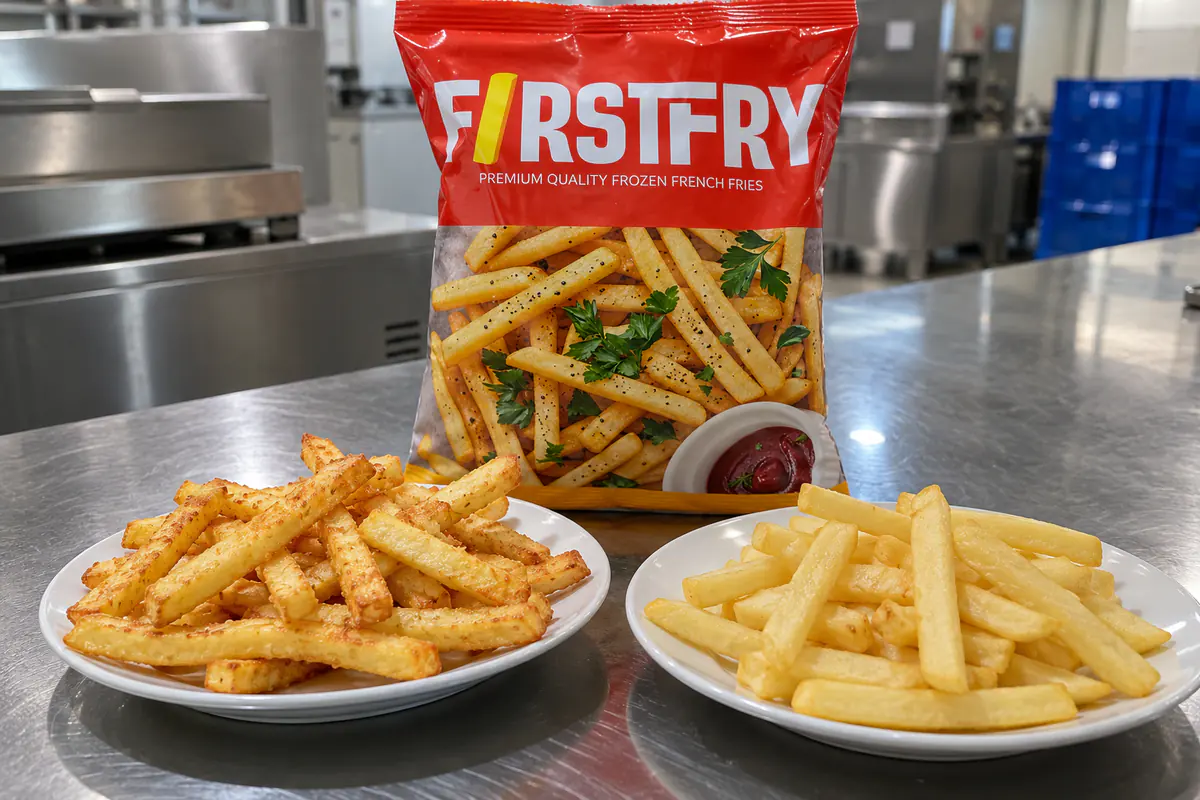
What a clear coat is made of
A clear-coat batter is a thin slurry, typically modified starch with rice flour, potato flour or a blend, sometimes with a leavening agent. Strips pass through it after blanching and before par-frying, so the coating is fixed in place by the par-fry and then frozen with the fry.
The word clear is doing real work. A properly applied coat is not visible on the finished fry, adds no batter flavour, and should not read as a coating to a customer at all. If a fry looks battered, tastes of flour, or shows a separate crust that flakes off, that is a heavy coating, which is a different product aimed at a different menu.
The mechanism: it is about steam, not oil
A fry goes soft for one reason. The centre is full of hot water. When it leaves the fryer that water turns to steam, migrates outward, and re-wets the crisp shell from the inside. Nothing to do with the fryer oil and everything to do with physics you cannot switch off.
A coating is a partial barrier. It does not stop moisture migration; it slows it enough that the crisp shell survives the trip from kitchen to customer. That is the whole benefit, and it explains why coating helps enormously in a sealed delivery box and barely matters if a fry is eaten within ninety seconds.
Direct comparison
| Attribute | Uncoated | Coated (clear coat) |
|---|---|---|
| Crisp holding time | 5-7 minutes | 12-20 minutes |
| Flavour | Clean potato | Very close to clean, slight starch note |
| Texture | Delicate, glassy shell | Firmer, more audible crunch |
| Cook time from frozen | Baseline | Around 15-30 seconds longer |
| Cost per kilo | Baseline | Modest premium |
| Delivery survivability | Poor | Good |
| Heat-lamp holding | Poor | Good |
| Best channel | Dine-in, counter service | Delivery, drive-through, buffet, banqueting |
Where coating is worth paying for
The test is time-to-mouth. Measure the realistic worst case, not the average: the fry that sits longest before someone eats it.
- Under 3 minutes - uncoated. Coating adds cost for a benefit nobody experiences
- 3 to 10 minutes - coated, or a thicker cut, or both
- Over 10 minutes - coated, thicker cut, vented packaging, and a holding protocol
- Unknown or variable - coated, because your worst case is longer than you think
Delivery deserves particular care because time-to-mouth is genuinely out of your control. A rider held up for fifteen minutes turns an uncoated fry into a limp one and the complaint arrives against your brand, not the platform's. Why fries go soggy in a delivery bag covers the packaging half of the problem.
Where uncoated still wins
Coating is not universally better, and treating it as an upgrade leads buyers to over-specify. In a restaurant where fries go straight from basket to plate to table, uncoated eats cleaner: a thinner, more delicate shell, no starch note, and the potato itself doing the flavour work.
Uncoated also suits menus where fries are dressed. Loaded fries, poutine-style dishes and anything sauced heavily will soften regardless, so paying for holding technology you then drown makes little sense. And in retail, home cooks using an oven rather than a fryer often get a better result from uncoated, because domestic ovens cannot deliver the heat a coating expects.
Specifying coating in an order
Coating is not a single yes or no. Ask suppliers three questions: what the coating is made from, what percentage pick-up it represents, and what holding time it is designed to achieve. Vague answers to all three usually mean a generic batter bought in rather than a formulation matched to the cut.
| Question | Why it matters |
|---|---|
| What is the coating composition? | Allergen declarations and label compliance in your market |
| What is the coating pick-up percentage? | Determines cost, cook time and how much you are paying for starch rather than potato |
| What holding time is it designed for? | Lets you match the product to your real time-to-mouth |
| Is a rice-flour or gluten-free option available? | Some destination markets and menus require it |
| Can the same cut be supplied both ways? | Lets you run coated for delivery and uncoated for dine-in from one supplier |
That last question matters more than most buyers expect. Operators running both dine-in and delivery often want the same cut in two finishes, which is straightforward to load in one mixed container. You can review coated and uncoated formats across the range and split a first order accordingly.
Frequently asked questions
What is a clear coat on french fries?
A thin starch batter, usually modified starch with rice or potato flour, applied after blanching and before par-frying. It is invisible on the finished fry and adds no noticeable flavour. Its only function is to slow moisture moving from the fry's centre to its surface, which extends crisp holding time.
How much longer do coated fries stay crisp?
Roughly two to three times longer. An uncoated fry holds crisp for about 5 to 7 minutes after frying; a clear-coated fry holds for about 12 to 20 minutes. Actual figures depend on cut size, how well the fries are drained, and whether they are held in a vented or sealed container.
Do coated fries taste different?
Slightly. A well-made clear coat is close to neutral, with a faint starch note and a firmer, more audible crunch than uncoated. Heavy or battered coatings taste distinctly of flour and form a separate crust, but those are a different product category aimed at a different menu position.
Are coated fries more expensive?
Yes, by a modest premium per kilo covering the coating material and the extra processing stage. Whether it is worth paying depends entirely on time-to-mouth: for delivery and heat-lamp holding it usually pays for itself in reduced complaints and waste, and for immediate dine-in service it rarely does.
Which is better for a home oven?
Often uncoated. Coatings are formulated for the heat of a commercial deep fryer, and a domestic oven struggles to deliver enough heat fast enough to crisp them properly. Retail packs sold for oven cooking are usually specified differently from the coated product sold into foodservice.
Test both finishes before you commit
Tell us your service channel and realistic time-to-mouth and we will recommend a coating specification. A first container can be split between coated and uncoated versions of the same cut so your kitchen can judge them side by side.
Email BuyFry@FirstFryFoods.com or request a quote. The export desk replies within one business day.