What Actually Moves Frozen Fry Prices: Potatoes, Oil, Energy and Freight
Four inputs drive frozen fry prices: raw potato, which is set once a year at harvest and is the largest single component; frying oil, which tracks global vegetable oil markets; energy, which is significant because freezing and cold storage run continuously; and freight, including reefer container rates. Prices tend to move in steps at harvest and at contract renewal rather than drifting continuously.
Published 2026-08-16 · FirstFry Export Desk · Market intelligence
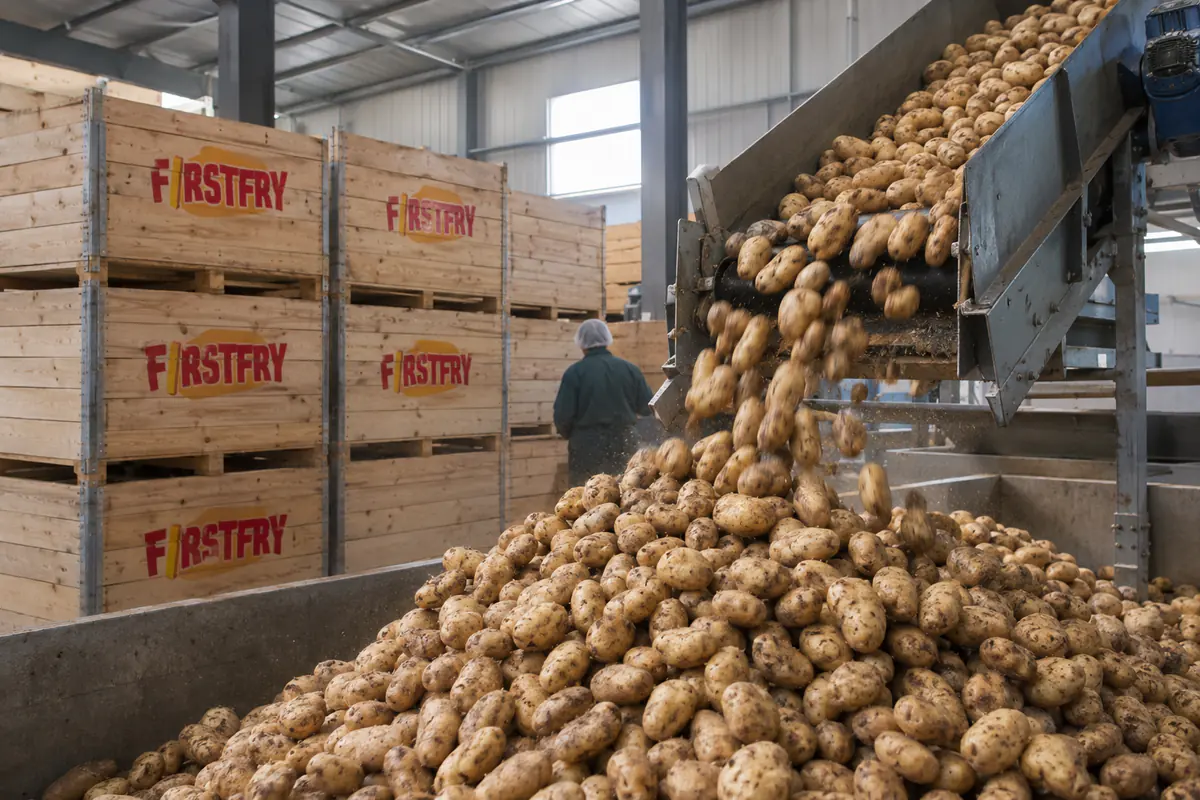
Why prices step rather than drift
Buyers often expect frozen fry prices to move smoothly with commodity indices. They do not. They tend to hold flat for months and then step, and the reason is the crop cycle.
The dominant input is potato, and in a single-crop origin the potato cost for an entire year is largely fixed at harvest. Whatever the contracted crop cost in February is what feeds the factory through the following January. A processor cannot reprice raw material mid-year because there is no second crop to buy from.
So price changes cluster at two moments: when the new crop is contracted and its cost is known, and when supply agreements come up for renewal. Between those points, a supplier holding a price is not doing you a favour - they genuinely have limited reason to move.
Driver one: the potato
Potato cost is not simply a price per tonne. What a processor actually pays for is usable solids, and three things move it.
- Yield per hectare - weather during the growing window, disease pressure, irrigation
- Dry matter achieved - a low-solids crop means more tonnes of potato per tonne of fry
- Grade-out rate - the share of the crop meeting size and shape requirements
That middle point is the one buyers miss. If a crop comes in at 19 percent dry matter instead of 22, the processor needs meaningfully more raw potato to produce the same tonnage of finished fries. Raw material cost per finished tonne rises even if the price per tonne of potatoes did not.
Grade-out matters most for long cuts. Long and extra-long grades require large, elongated tubers selected out of the crop, so a season with smaller tubers tightens long-cut availability sharply while standard cuts remain plentiful. That is why long-cut grades and their premium move differently from the rest of the range.
Driver two: frying oil
Par-frying deposits 4 to 8 percent oil into the product, and the line consumes more than that because oil is filtered, topped up and eventually replaced. Oil is therefore a real and continuously repriced input.
Unlike potato, oil tracks global markets in near real time, responding to palm and soft oil supply, biofuel policy in producing and consuming countries, and currency. It is the input most likely to move between the moment you are quoted and the moment you order, which is why quote validity windows exist and are usually short.
Driver three: energy
A frozen fry plant runs cooling continuously. Freezing tunnels, cold stores and refrigerated loading bays consume power whether or not the line is running, and cold storage of the annual crop runs for months before processing.
| Stage | Energy use | Note |
|---|---|---|
| Raw potato cold storage | Continuous, months | Runs from harvest until processing |
| Blanching and par-frying | High, batch-linked | Heat, only while the line runs |
| IQF freezing | Very high, line-linked | The single largest processing load |
| Finished goods cold store | Continuous | Runs until the container is loaded |
| Reefer container | Continuous, in transit | Paid through freight rather than plant cost |
Energy price shocks therefore hit frozen food harder than ambient food, and they hit it in two places: at the plant and again in the reefer. This is part of why frozen products from energy-cost-advantaged origins can hold price better through an energy spike.
Driver four: freight
Reefer freight is a larger share of landed cost than most buyers assume, and it is the most volatile of the four. Container rates respond to vessel capacity, port congestion, canal disruption and fuel prices, and reefer slots specifically are constrained because not every vessel position can carry powered containers.
Distance is the structural component. A short sailing consumes fewer days of reefer power and less shelf life. That is a permanent advantage for origins close to their markets, independent of whatever the spot rate happens to be. How India's cost base is structured covers the geographic side.
Specification: the driver you control
The four inputs above are market conditions. Specification is the one lever a buyer holds directly, and it moves price more than most negotiations do.
| Choice | Effect on price | Why |
|---|---|---|
| Standard vs long-cut grade | Higher | Tighter tuber selection, smaller share of the crop qualifies |
| Coated vs uncoated | Higher | Coating material plus an additional process stage |
| Thin vs thick cut | Slightly higher for thin | More cutting, more slivers, higher oil uptake |
| Retail pack vs 10kg carton | Higher | More packaging material and slower packing line speed |
| Private label vs standard brand | Varies | Artwork and plate costs amortised over the run length |
| Mixed-SKU vs single-SKU container | Slightly higher | More changeovers on the line |
The practical implication is that a buyer chasing a lower number should examine the specification before the negotiation. Dropping from a long-cut grade to standard, or from coated to uncoated where holding time does not demand it, moves price further than the discount most negotiations produce. How a price per kilo is actually built up breaks the components down.
Timing a contract
Because the potato component reprices annually, contract timing matters. Buyers who negotiate annual supply agreements shortly after harvest, when crop cost and quality are known, generally get a firmer and better-informed price than those negotiating just before harvest, when a processor is pricing against an unknown crop.
The corollary is that a supplier quoting a long fixed price before their new crop is contracted is either building in a risk premium or taking a position. Neither is inherently wrong, but it is worth knowing which. The harvest cycle behind price steps sets out the calendar to plan around.
Frequently asked questions
What is the biggest cost in a frozen french fry?
Raw potato, which is typically the largest single input. Crucially it is priced on usable solids rather than on tonnes: a low dry matter crop means more raw potato is needed per tonne of finished fries, so raw material cost per finished tonne can rise even when the price per tonne of potatoes has not.
Why do frozen fry prices change in steps rather than gradually?
Because the dominant input reprices once a year. In a single-crop origin, the potato cost feeding the factory for twelve months is largely fixed when the crop is contracted at harvest. There is no second crop to buy from mid-year, so prices hold and then step at harvest or contract renewal.
How much does freight affect frozen fry prices?
More than most buyers assume, and it is the most volatile of the four main inputs. Reefer rates respond to vessel capacity, congestion, canal disruption and fuel, and powered container slots are limited. Distance is the structural part: shorter sailings consume fewer days of reefer power and less shelf life.
Does asking for a specific cut change the price?
Yes, often more than negotiating does. Long and extra-long grades cost more because fewer tubers qualify, coating adds material and a process stage, retail packs cost more than 10kg cartons, and mixed-SKU containers add line changeovers. Reviewing the specification usually beats pushing on the number.
When is the best time to negotiate an annual fry contract?
Shortly after harvest, once crop cost, yield and dry matter are known. A supplier pricing before their new crop is contracted is quoting against an unknown and will either build in a risk premium or take a position, neither of which usually works in the buyer's favour.
Understand what is in your quote
Ask the export desk to break a quotation into its components - specification, packaging, Incoterm and freight - so you can see which parts are market conditions and which are choices you can change.
Email BuyFry@FirstFryFoods.com or request a quote. The export desk replies within one business day.