Auditing a Frozen Food Supplier: The Checklist Buyers Actually Use
A frozen food supplier audit should verify five things: that certification is current and its scope actually covers the product and site you are buying from, that the cold chain is monitored and recorded rather than assumed, that traceability runs both directions from a batch code, that the plant has a complaint and recall history it will discuss openly, and that specifications are controlled documents rather than sales material. Certificates prove a plant passed on one day; records prove how it runs every day.
Published 2026-08-21 · FirstFry Export Desk · Sourcing & supplier qualification
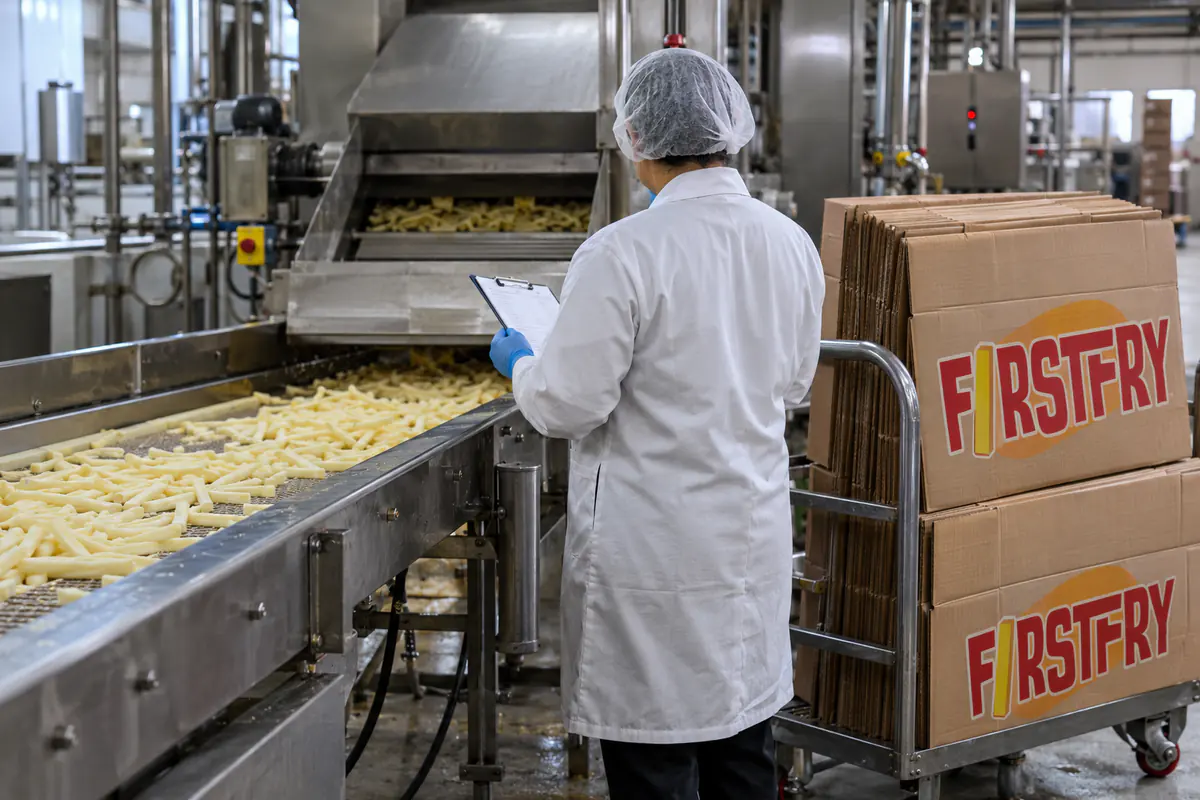
Buyers auditing a frozen food plant for the first time tend to spend their day on the things that photograph well: floors, uniforms, the freezer, the metal detector. Those matter. They are also the things a plant can prepare for, and every plant expecting an auditor does.
The questions that actually predict supplier performance are duller and harder to stage. They are about records, versions, exceptions and history — the evidence of how the plant behaves on an ordinary Tuesday when nobody is visiting.
1. Read the certificate properly
A certificate is three pieces of information and most buyers only check one. The scheme and the grade are the headline. The two that matter more are the scope and the site.
- Scope — does it name the product category you are buying? A certificate covering frozen vegetables does not automatically cover coated potato products.
- Site address — does it match the plant that will produce your order? Group certificates sometimes cover one facility out of several.
- Validity and audit date — when was it last audited, and is a re-audit due inside your production window?
- Unannounced or announced — an unannounced audit result tells you more than an announced one.
2. Ask for records, not assurances
For each of the following, the useful request is the same: show me the last thirty days.
| Ask for | What good looks like | What to worry about |
|---|---|---|
| Freezer temperature logs | Continuous, with excursions noted and actioned | Perfectly flat lines with no exceptions ever recorded |
| Metal detection checks | Test pieces run at set intervals, failures logged | Records only from audit weeks |
| Oil quality records | Regular testing against a discard standard | No standard defined |
| Product weight checks | Sampling plan, results, action on drift | Averages only, no individual readings |
| CCP monitoring | Filled in real time, signed | All in the same pen and handwriting |
A log with no exceptions in it is not a good log. Real plants have excursions; what distinguishes a well-run one is that the excursion is recorded, investigated and closed out. Uniform perfection usually means the records are being completed after the fact.
3. Test traceability in both directions
Pick a batch code off a carton in the warehouse and ask two questions. Which raw material lots went into it, and which customers received it? Then time the answer.
A plant with working traceability produces both within an hour, usually much less. A plant that needs a day to reconstruct it from paper does not have a recall capability, whatever its recall procedure document says. If your market requires you to be able to withdraw product quickly, this single test is the most valuable hour of the audit.
4. Ask about complaints and rejections
Ask directly: what were your last three customer complaints, and what did you change? The content of the answer matters less than the shape of it.
A supplier who describes three specific incidents, the root cause of each and the corrective action is telling you they have a functioning quality system and enough confidence to be candid. A supplier who says they have never had a complaint is either very new or not counting.
5. Check that specifications are controlled documents
Ask for the specification of the product you are buying and look at the header. Does it carry a version number, an issue date and an owner? Is there a change history? Can they show you the previous version and say what changed?
Specification control sounds bureaucratic until the first time a delivery arrives different from the last one and nobody can establish what the agreed standard actually was. An uncontrolled specification is a marketing document.
What to take away with you
- The verified certificate, with scope and site confirmed against the issuing body directory
- A copy of the controlled specification for each SKU, with version and date
- The traceability exercise result, with the time it took written on it
- Photographs of the line running your product category, not a general tour
- A written summary of any non-conformance you raised and the agreed closure date
And one thing that is not on a checklist: whether the quality manager answered your questions or the sales manager did. In plants where quality has real authority, the quality manager takes the audit. Where it does not, sales runs the day and quality is produced on request.
Frequently asked questions
What should I check first when auditing a frozen food supplier?
The certificate scope and site address. A valid certificate that does not cover your product category, or covers a different facility in the same group, is the most common and most consequential gap — and it takes two minutes to check against the issuing body directory.
How do I test whether a supplier has real traceability?
Pick a batch code off a carton and ask which raw material lots went into it and which customers received it. Time the answer. Under an hour indicates a working system; a day means the recall procedure exists on paper only.
Is a remote or document audit good enough?
It verifies certification, specifications and records, which is most of the value. What it cannot do is test traceability against physical stock or show you how the line runs. For a first container a document audit is often proportionate; before a long-term contract, visit.
What is a red flag in temperature records?
Perfection. Continuous logs with no excursion ever recorded usually mean the log is completed retrospectively. A well-run plant records excursions, investigates them and closes them out — that trail is the evidence you want.
Auditing us?
Ask for the audit pack. Certificates with scope and site, controlled specifications by SKU, cold-chain records and a traceability walkthrough — sent before you book travel, so the visit is spent on the line rather than on paperwork.
Email BuyFry@FirstFryFoods.com or request a quote. The export desk replies within one business day.