Importing Frozen Fries into Kuwait: PAFN Registration and Documentation
Importing frozen french fries into Kuwait requires a Kuwaiti-licensed importer registered with the Ministry of Commerce and Industry, registration of the product with the Public Authority for Food and Nutrition (PAFN) through its electronic platform, Arabic labelling to GSO standards, a health certificate from the competent authority in the country of export, and a consignment arriving with the required minimum remaining shelf life. PAFN — not the standards authority — is the food regulator.
Published 2026-06-29, updated 2026-07-31 · FirstFry Export Desk · Importing, duties & compliance
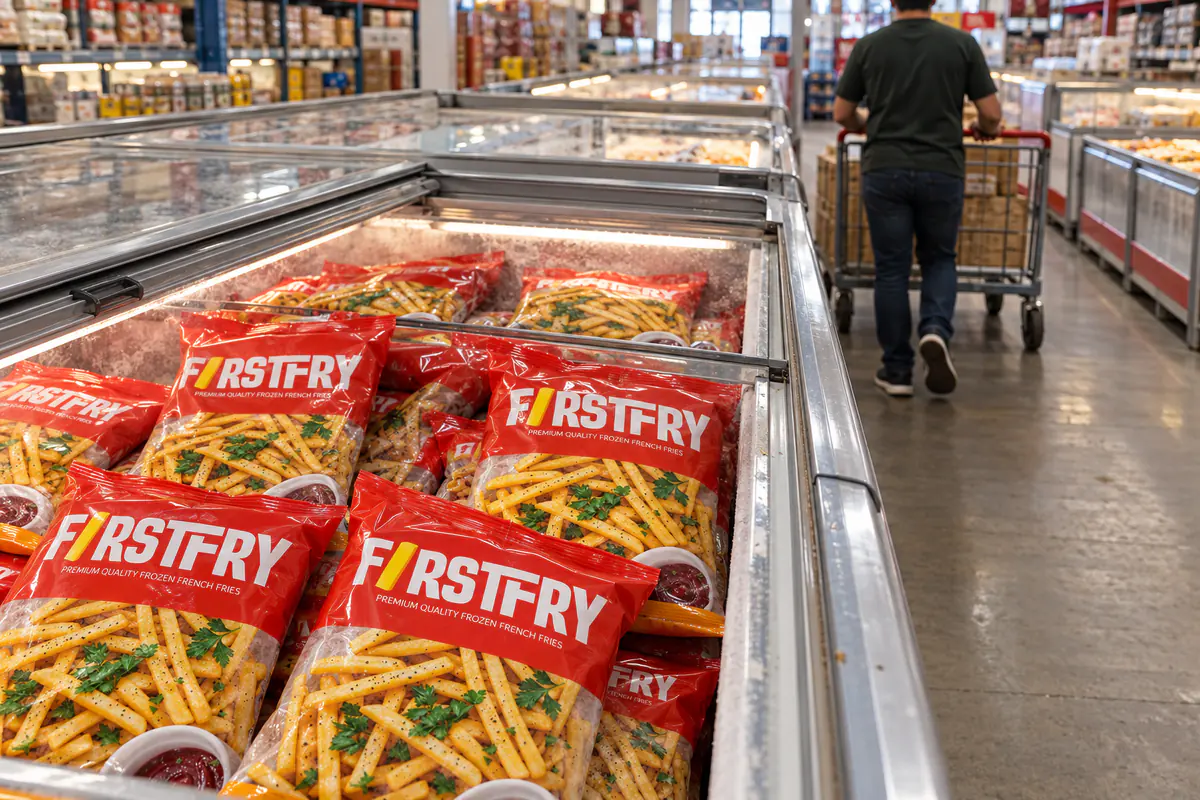
Kuwait is a solid, distributor-led market for frozen potato products, and the mechanics are not difficult once one thing is clear: which authority you are actually dealing with. Exporters are frequently pointed at the standards body first, spend weeks in the wrong process, and only then discover that food sits with PAFN.
Step 1 — PAFN, and why the distinction matters
The Public Authority for Food and Nutrition was established by Law No. 112 of 2013, later amended by Law No. 16 of 2019, and it is the body responsible for food safety and food import control in Kuwait. It has issued guidance setting out the conditions countries and exporters must meet to send food to Kuwait, and it operates an electronic platform — Raqib — to handle food import procedures.
The Public Authority for Industry is a separate body dealing with standards and conformity. Both can appear in an import file, but they answer different questions. Ask your Kuwaiti importer to confirm which approvals your product needs from which body, in writing, before you begin.
Step 2 — The Kuwaiti importer
Importers of licensed products must be Kuwaiti citizens or Kuwait-based brokers, registered with the Ministry of Commerce and Industry. A foreign exporter therefore sells to a licensed Kuwaiti importer or distributor rather than importing in its own name.
As in Qatar, this makes the distributor the centre of the process. Your importer holds the registrations, files on the platform and is the party the authority deals with — so choose for regulatory competence, not only for order size.
Step 3 — The registration file
The exporter's contribution is the technical file. It is very close to the file required elsewhere in the Gulf, which is convenient if you are opening several GCC markets at once — assemble it once and reuse it.
| Document | What it establishes |
|---|---|
| Product specification sheet | Identity, cut, process and physical parameters |
| Full ingredient declaration with percentages | Ingredient compliance and label build |
| Nutritional analysis | Mandatory Arabic label panel |
| Shelf-life justification at −18 °C | Supports the declared expiry and the arrival rule |
| Label artwork, Arabic and English | Reviewed as part of registration |
| Manufacturer licence and food-safety certification | Facility identity and quality system |
| Health or free-sale certificate | Legal sale in the country of origin |
| Certificate of analysis per batch | Consignment-level conformity |
| Certificate of origin | Duty treatment |
Step 4 — Labelling
Kuwait applies GSO labelling standards, in Arabic, with English commonly alongside. The panel carries:
- Product name and description
- Ingredient list in descending order by weight
- Net weight in metric units
- Production date and expiry date, printed as part of the pack coding
- Storage conditions — −18 °C or colder
- Country of origin
- Manufacturer name and address
- Importer or distributor details
- Nutritional information panel
- Batch or lot code
The date rule is worth repeating because it is the most common avoidable rejection across the whole Gulf: dates are printed at production, not stickered on arrival. Agree the date-coding format with the manufacturer at sampling stage.
Step 5 — Shelf life on arrival
Kuwait, like its GCC neighbours, requires imported food to arrive with a defined proportion of its declared shelf life still unused. For frozen fries this is normally generous — a 24-month declared life on a short sailing from India leaves a wide margin — but it disqualifies aged or clearance stock.
| Scenario | Age at arrival | Declared life remaining |
|---|---|---|
| Fresh production, direct sailing | About 2 months | About 22 months |
| Normal replenishment cycle | 3–4 months | 20–21 months |
| Stock held at origin before sale | 8–10 months | 14–16 months |
| Clearance or distressed stock | 14 months or more | Under 10 months |
Two contract terms remove the risk entirely: require the production date printed on the carton, and specify a maximum age at loading. Neither costs anything to agree and both are difficult to fix afterwards.
Step 6 — Classification, duty and the cold chain
Par-fried frozen fries classify under HS heading 2004.10, and Kuwait moved to the GCC integrated 12-digit tariff from January 2025 — see the GCC 12-digit tariff migration. Duty is assessed on the full national code, so confirm that line with your broker rather than quoting the heading.
- Set point −18 °C on the bill of lading
- Container pre-cooled before loading begins
- Direct sailing where available
- Data logger fitted, readout to the importer on arrival
- Reefer plug-in pre-arranged at the terminal, pre-cooled truck for the inland leg
- Production date printed on the carton
Supplying from India
FirstFry manufactures in Morbi, Gujarat and ships through Mundra and Kandla, a short direct route into the Gulf. We provide the exporter half of a PAFN file — specification sheets, ingredient and nutritional data, shelf-life basis, certificate of analysis per batch, certificate of origin and health certificate — with facility documentation shared during qualification. The full export list is published so a registration file can be assembled ahead of an order, and most Kuwaiti programmes open with straight-cut fries in bulk foodservice packs. If you are opening more than one Gulf market, the file overlaps heavily with the Qatari import route.
Frequently asked questions
Which authority regulates food imports into Kuwait?
The Public Authority for Food and Nutrition (PAFN), established under Law No. 112 of 2013 and amended by Law No. 16 of 2019. The Public Authority for Industry is a separate body handling standards and conformity. Exporters frequently start with the standards body and lose weeks before discovering that food safety and food import control sit with PAFN.
What is Raqib?
Raqib is the electronic platform PAFN operates to streamline food import procedures in Kuwait. Your Kuwaiti importer files through it. Confirm the current platform and process with PAFN or your clearing agent before you begin, since Gulf food authorities revise their electronic systems periodically.
Can a foreign company import food into Kuwait directly?
No. Importers of licensed products must be Kuwaiti citizens or Kuwait-based brokers registered with the Ministry of Commerce and Industry. A foreign exporter sells to a licensed Kuwaiti importer or distributor, who holds the registrations and is the party the authorities deal with.
What labelling does Kuwait require on frozen fries?
Arabic labelling to GSO standards, commonly with English alongside, carrying product name, ingredients in descending order, net weight, production and expiry dates, storage conditions of −18 °C or colder, country of origin, manufacturer and importer details, a nutritional panel and a batch code. Dates must be printed as part of the pack coding rather than stickered on arrival.
Does Kuwait apply a minimum remaining shelf life on imported frozen food?
Yes. Like other GCC states, Kuwait requires imported food to arrive with a defined proportion of its declared shelf life unused. Frozen fries with a 24-month declared life shipped promptly after production sit well inside that on a short sailing from India, but aged or clearance stock can fail. Require the production date on the carton and set a maximum age at loading.
Opening Kuwait?
Tell us which SKUs your Kuwaiti distributor intends to register and we will send the specification, ingredient, nutritional and shelf-life documentation the PAFN file needs — and the same file covers most of your next GCC market.
Email BuyFry@FirstFryFoods.com or request a quote. The export desk replies within one business day.