Importing Frozen Fries into Qatar: Registration, Conformity and Cold-Chain Rules
Importing frozen french fries into Qatar requires a licensed Qatari importer, registration of the product with the Ministry of Public Health so it carries a valid product registration number, a health certificate from the competent authority in the country of origin, Arabic labelling to GSO standards, and — for food categories within scope — a certificate of conformity issued under a pre-shipment verification programme by an approved body before the consignment leaves origin.
Published 2026-06-26, updated 2026-07-31 · FirstFry Export Desk · Importing, duties & compliance
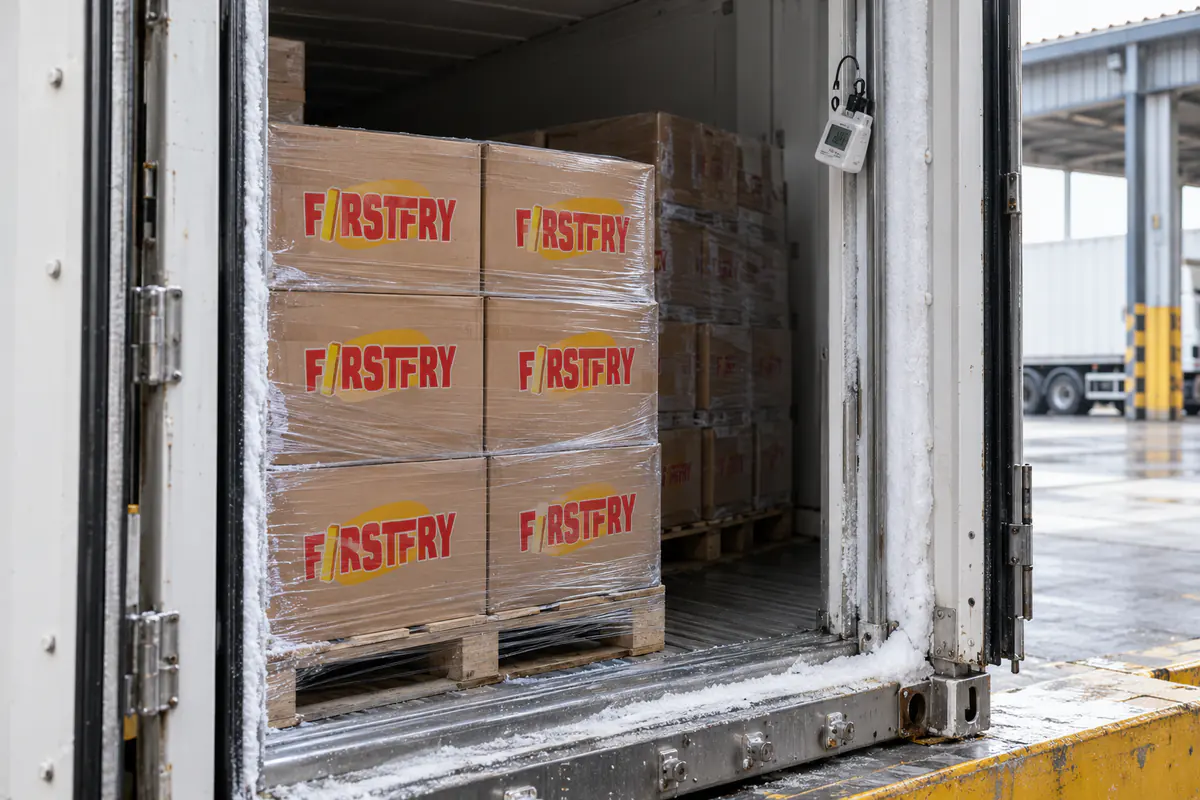
Qatar is a compact, high-value market served largely through established distributors, and its import process is orderly provided you understand one structural difference. For food categories inside its conformity programme, Qatar wants the check done at origin, before the goods sail. An exporter who treats conformity as a destination-side formality discovers the problem when the container is already at sea.
Step 1 — The Qatari importer
Import licensing in Qatar sits with Qatari nationals or with the Qatari partner in a limited liability company, registered with the Ministry of Commerce and Industry. As a foreign exporter you sell to that licensed importer or distributor; you do not import in your own name.
Practically, this makes distributor selection the most consequential decision in the whole process. Your importer holds the registrations, files with the authorities and is the party the ministry deals with.
Step 2 — Product registration with the Ministry of Public Health
Food products are registered electronically with the Ministry of Public Health, and a registered product carries a product registration number that the clearance process references. Registration is product-level, so a mixed load of several SKUs means several registrations.
The exporter's job is to supply the technical file the importer registers with. Have this ready before you quote:
| Document | What it establishes |
|---|---|
| Product specification sheet | Identity, cut, process and physical parameters |
| Full ingredient declaration with percentages | Ingredient compliance and the label panel |
| Nutritional analysis | Mandatory label information |
| Shelf-life justification at −18 °C | Supports the declared expiry date |
| Label artwork, Arabic and English | Reviewed as part of registration |
| Manufacturer details and food-safety certification | Facility identity and quality system |
| Free-sale or health certificate | Legal sale in the country of origin |
| Certificate of analysis per batch | Consignment-level conformity |
Step 3 — Pre-shipment conformity, the step that catches exporters
Qatar operates conformity assessment for food consignments through approved certification bodies, with verification performed at origin and a certificate of conformity issued before shipment. Where your product falls inside the programme's scope, that certificate is a clearance condition.
Three consequences follow, and all three are scheduling problems rather than paperwork problems:
- The verification has to be booked into the production schedule, because it happens at origin around the time of production and loading
- The approved body must be engaged in advance — you cannot retrofit a pre-shipment certificate once the vessel has sailed
- The document set presented for verification must already be internally consistent, because that is exactly what is being checked
Step 4 — Labelling and the health certificate
Qatar applies GSO labelling standards. Labels must be in Arabic, and English alongside Arabic is normal. The panel carries product name, ingredients in descending order, net weight, production and expiry dates, storage conditions (−18 °C or colder for frozen fries), country of origin, manufacturer, importer details, nutritional panel and batch code.
The health certificate is issued by the competent authority in the country of export and must attest that the consignment is safe and suitable and complies with the applicable GCC technical regulations. It is not an exporter-issued document, so it carries a lead time — see the Indian export document set for who issues what.
As everywhere in the Gulf, print the production and expiry dates as part of the pack coding. A stickered date applied in the destination market is a rejection risk.
Step 5 — Classification, duty and shelf life
Par-fried frozen fries classify under HS heading 2004.10. Qatar implemented the GCC integrated 12-digit tariff from January 2025, so your broker works with the full national code — the background is in the GCC move to 12-digit tariff codes.
| Charge or rule | How it works | What to verify |
|---|---|---|
| Customs duty | GCC common external tariff applied to declared value | The live rate for your full 12-digit national code |
| Port and reefer charges | Terminal handling plus powered reefer time | The reefer tariff specifically, not the dry-cargo rate |
| Inspection and sampling | Food control inspection on arrival | Whether a first consignment triggers laboratory testing |
| Minimum remaining shelf life | Consignment must arrive with a proportion of declared life unused | The current threshold for your product category |
The shelf-life rule is comfortable for frozen fries shipped promptly after production — a 24-month declared life leaves a wide margin on a short sailing. It is only a problem for warehoused or clearance stock, which is a reason to require the production date on the carton and a maximum age at loading in your purchase terms.
Step 6 — The cold chain
- Set point −18 °C, stated on the bill of lading
- Container pre-cooled before loading
- Direct sailing where available; each transhipment is a plug-out risk
- Data logger fitted, readout released to the importer on arrival
- Reefer plug-in pre-arranged at the terminal
- Production date printed on the carton
Supplying from India
FirstFry manufactures in Morbi, Gujarat and loads through Mundra and Kandla — a short sailing to the Gulf, which matters both for freight cost and for how much declared shelf life survives to arrival. We supply the exporter half of a Qatari registration file and can align production timing with a pre-shipment verification booking. The frozen potato product line-up is published so your importer can start a registration file before an order is placed, and most Qatari programmes open with the 9mm straight cut.
Frequently asked questions
What is required to import frozen french fries into Qatar?
A licensed Qatari importer registered with the Ministry of Commerce and Industry, product registration with the Ministry of Public Health so the product carries a valid registration number, a health certificate from the competent authority in the country of export attesting conformity with the applicable GCC technical regulations, Arabic labelling to GSO standards, and a certificate of conformity where the product falls inside Qatar's pre-shipment verification programme.
What is Qatar's pre-shipment certificate of conformity?
Qatar assesses conformity for food consignments through approved certification bodies, with verification carried out at origin and a certificate issued before the goods ship. Where a product is inside the programme's scope this certificate is a clearance condition, which means the verification must be booked around production and loading rather than treated as destination-side paperwork.
Can a foreign exporter import into Qatar directly?
No. Import licensing sits with Qatari nationals or the Qatari partner in a limited liability company registered with the Ministry of Commerce and Industry. A foreign exporter sells to that licensed importer or distributor, who holds the registrations and deals with the authorities, which makes distributor selection the most consequential decision in the process.
Does Qatar use 12-digit HS codes?
Yes. Qatar implemented the GCC integrated customs tariff with 12-digit national codes from January 2025, alongside other GCC states. Frozen par-fried potato products classify under heading 2004.10, but duty is assessed against the full national code, so quote and verify the 12-digit line rather than the six-digit heading.
Is there a minimum shelf life requirement on arrival in Qatar?
GCC states require imported food to arrive with a defined proportion of its declared shelf life still unused. Frozen fries with a 24-month declared life shipped soon after production sit comfortably inside that on a short Gulf sailing, but warehoused stock can fail. Confirm the current threshold for your product category and require the production date on the carton.
Shipping to Doha?
Tell us which SKUs your Qatari distributor intends to register and we will send the specification, ingredient, nutritional and shelf-life documentation their MoPH file needs, and align production timing with any pre-shipment verification booking.
Email BuyFry@FirstFryFoods.com or request a quote. The export desk replies within one business day.