Importing Frozen Fries into Oman and Bahrain: A Combined Buyer's Guide
Oman and Bahrain apply the same GSO standards as the rest of the Gulf, so one technical file serves both, but they are administered differently. In Oman, food is registered with the Ministry of Agriculture, Fisheries and Water Resources through its Food Safety and Quality Centre. In Bahrain, food control sits with the Ministry of Health's Public Health Directorate, with customs handled by Customs Affairs. Both require a licensed local importer and Arabic labelling.
Published 2026-07-01, updated 2026-07-31 · FirstFry Export Desk · Importing, duties & compliance
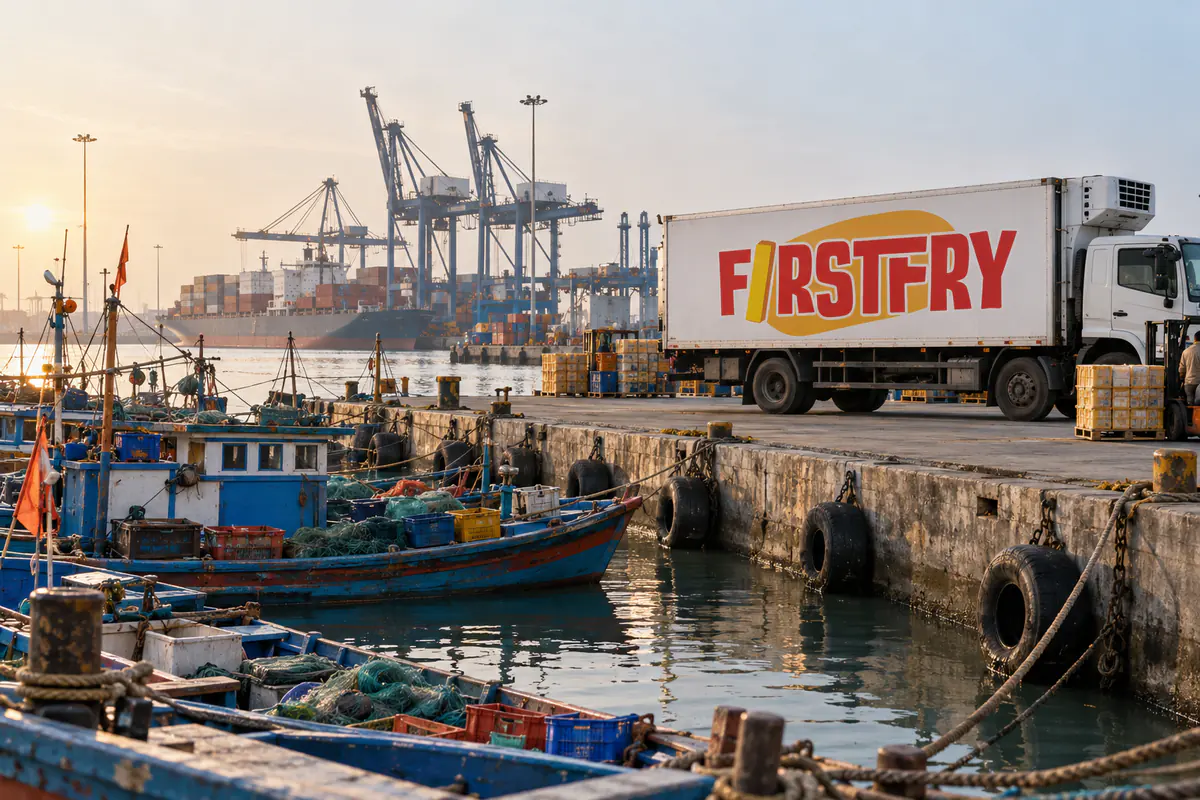
Oman and Bahrain are frequently treated as an afterthought behind the UAE and Saudi Arabia, which is a mistake for a distributor with regional ambitions and a reasonable one for a first-time exporter deciding where to start. This guide covers both because the exporter-side work overlaps almost completely — and because the differences that do exist are worth knowing before you pick which to open first.
Oman — registration through the Food Safety and Quality Centre
Food products must be registered before commercial import, with registration handled by the Ministry of Agriculture, Fisheries and Water Resources through its Food Safety and Quality Centre. The centre maintains a product database intended both to control safety and to streamline clearance, and the ministry has periodically tightened food safety requirements for imported products under the framework established by Royal Decree No. 84/2008.
The documents an Omani registration expects from the exporter are the familiar set:
- Product specification sheet with a full ingredient list and allergen declaration
- Certificate of origin from the exporting country
- Food safety or free-sale certificate confirming the product is approved for consumption in the country of origin
- Nutritional analysis and shelf-life justification
- Label artwork in Arabic and English
- Manufacturer details and food-safety certification
Bahrain — Ministry of Health food control
In Bahrain, food safety regulation sits with the Ministry of Health, whose Public Health Directorate implements food regulations, conducts inspections and oversees imported food. Its Food Control Section handles the import-side functions — release advice for imported food, inspection, sampling and analysis, and detention or rejection notices. Customs clearance itself runs through Customs Affairs, with applications submitted via Bahrain's trade portal.
Two practical points for an exporter. First, certain categories require pre-import licensing with additional documentation, including commercial registration evidence from the applicant and a free-sale certificate that may require legalisation through a Bahraini or other Arab embassy in the country of origin — a step with a real lead time that is easy to discover too late. Second, Bahrain's smaller domestic volume means many programmes are served alongside a Saudi or UAE distributor rather than as a standalone container.
Side by side
| Oman | Bahrain | |
|---|---|---|
| Food authority | Ministry of Agriculture, Fisheries and Water Resources — Food Safety and Quality Centre | Ministry of Health — Public Health Directorate, Food Control Section |
| Customs | Directorate General of Customs | Customs Affairs, via the national trade portal |
| Product registration | Required before commercial import | Category-dependent; pre-import licensing applies to some foods |
| Standards applied | GSO | GSO |
| Labelling | Arabic, English commonly alongside | Arabic, English commonly alongside |
| Legalisation of certificates | Confirm per document | Free-sale certificate may require embassy legalisation |
| Tariff codes | GCC integrated 12-digit from January 2025 | GCC integrated 12-digit from January 2025 |
| Typical entry strategy | Standalone container viable with an established distributor | Often served alongside a Saudi or UAE programme |
The order-size question, which matters more here
Compliance is not what makes Oman and Bahrain different — volume is. Both are markets where a distributor's opening order is more likely to be a mixed load of several SKUs than a full container of one line.
That has a direct registration consequence, and it is the single most useful thing to plan for: registration is per product, so a five-SKU opening container means five registrations rather than one. The commercial logic of building that load is covered in ordering a mixed-SKU container; the compliance cost of it is that your timeline is set by the slowest registration in the set.
A sensible pattern for a first shipment into either market: register a narrow opening range, ship it, then widen the SKU list once the first clearance has proved the file.
Duty, classification and shelf life
Par-fried frozen fries classify under HS heading 2004.10. Both markets implemented the GCC integrated customs tariff with 12-digit national codes from January 2025 — background in the GCC move to 12-digit tariff codes — so duty is assessed against the full national line and should be confirmed with a local broker rather than quoted from the heading.
Both markets, like the rest of the Gulf, apply a minimum remaining shelf life on arrival. For frozen fries on a short sailing from India this is a wide margin rather than a constraint, provided you require the production date on the carton and set a maximum age at loading in your purchase terms.
Cold chain and routing
- Set point −18 °C stated on the bill of lading
- Container pre-cooled before loading
- Direct sailing where the service exists — both markets are also served via transhipment, and each transhipment is a plug-out risk
- Data logger fitted, readout released on arrival
- Reefer plug-in pre-arranged, pre-cooled truck for the inland leg
- Production date printed on every carton
Routing is where these two differ from the larger Gulf markets. Direct services are thinner, so confirm the actual routing on the booking rather than assuming a direct sailing, and price the transhipment risk into your cold-chain specification.
Supplying from India
FirstFry manufactures in Morbi, Gujarat and loads through Mundra and Kandla. Because the GSO framework is shared across the Gulf, the technical file we provide for an Omani or Bahraini registration is the same one used for the UAE, Saudi Arabia, Qatar and Kuwait — assemble it once and it serves the region. The frozen fry and potato specialty range is published so your distributor can begin a registration file before committing to an order, and mixed opening loads normally build around 7mm and 9mm straight cuts with two or three specialty lines alongside.
Frequently asked questions
Which authority registers imported food in Oman?
The Ministry of Agriculture, Fisheries and Water Resources, through its Food Safety and Quality Centre. Products must be registered before commercial import, and the centre maintains a product database used both for safety control and to streamline clearance, under the framework established by Royal Decree No. 84/2008.
Which authority controls food imports into Bahrain?
Food safety sits with the Ministry of Health's Public Health Directorate, whose Food Control Section handles release advice for imported food, inspection, sampling and analysis, and detention or rejection notices. Customs clearance runs through Customs Affairs, with applications submitted through Bahrain's trade portal.
Can one registration file serve both Oman and Bahrain?
The exporter's technical file largely can, because both markets apply GSO standards — specification sheet, full ingredient declaration, nutritional analysis, shelf-life justification, certificate of origin, free-sale or health certificate and bilingual artwork. The filing route, the responsible authority and any legalisation requirement differ, so the file is shared but the submissions are separate.
Should I open Oman or Bahrain first?
Oman more often supports a standalone container with an established distributor, while Bahrain's smaller domestic volume means programmes are frequently served alongside a Saudi or UAE distributor. If you are already shipping into the larger Gulf markets, adding Bahrain to an existing programme is usually simpler than opening it cold.
Do Oman and Bahrain use 12-digit HS codes?
Yes. Both implemented the GCC integrated customs tariff with 12-digit national codes from January 2025. Frozen par-fried potato products classify under heading 2004.10, but duty is assessed against the full national code, so confirm the 12-digit line with a local broker rather than working from the six-digit heading.
Adding Oman or Bahrain to a Gulf programme?
Tell us which SKUs your distributor wants to register and we will send the technical file — the same set already serves the UAE, Saudi Arabia, Qatar and Kuwait, so opening an additional Gulf market is mostly a filing exercise rather than a new document build.
Email BuyFry@FirstFryFoods.com or request a quote. The export desk replies within one business day.