Importing Frozen Fries into Sri Lanka and Bangladesh: Two Near Markets, Two Systems
Sri Lanka and Bangladesh both require food import approval before clearance, a health certificate from the origin authority and locally compliant labelling. Sri Lanka works through Food Act administration under the Ministry of Health with standards referenced to SLSI; Bangladesh routes through BSTI standards and BFSA oversight. The commercial advantage of both from Indian origin is transit time — days rather than weeks — which changes stock planning and lets smaller, more frequent orders work.
Published 2026-08-21 · FirstFry Export Desk · Importing, duties & compliance
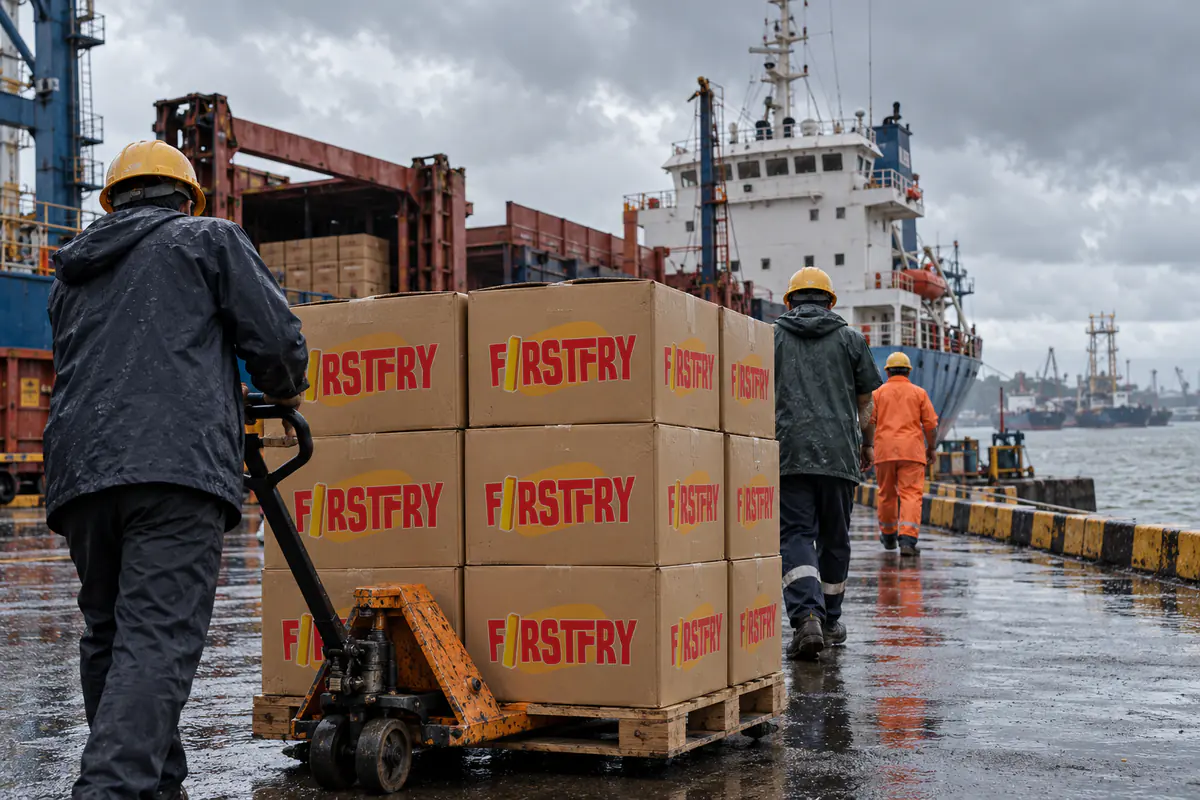
Exporters chasing the Gulf sometimes overlook the two markets closest to home. Both Sri Lanka and Bangladesh have growing QSR and hotel sectors, both import frozen potato products, and both sit within a few days of Indian ports. The short sail is not a minor detail: it changes the working-capital shape of the trade.
With a four-week transit an importer buys to cover a quarter. With a five-day transit the same importer can buy monthly, hold less stock, and adjust to what is actually selling. That suits a distributor testing a new category, and it means a first order does not have to be a full container commitment.
Sri Lanka
Food imports are administered under the Food Act by the Ministry of Health, with the Food Control Administration Unit and authorised food inspectors handling clearance, and standards commonly referenced to the Sri Lanka Standards Institution. In practice the importer needs to be registered, the product needs to comply with the applicable food regulations including labelling, and consignments are subject to inspection and sampling at the port.
- Importer registration with the relevant authority before the consignment arrives
- Health certificate from the competent authority in India covering the consignment
- Labelling compliant with Sri Lankan food labelling regulations, including date marking and storage instructions
- Inspection and sampling at the point of entry, with release following results
Sri Lanka has also, at various points, applied import controls and restrictions on non-essential food categories during periods of currency pressure. That is a commercial risk to check at the time of contracting rather than a permanent feature.
Bangladesh
Bangladesh routes imported food through standards administered by BSTI, with the Bangladesh Food Safety Authority responsible for food safety oversight. Imported processed food generally requires conformity with the applicable BSTI standard where one exists, alongside the usual customs and clearance documentation.
The practical work for a first shipment is establishing which standard applies to the product as classified, what testing or certification that implies, and how the importer demonstrates conformity at clearance. This varies by product category and is the question to put to a local clearing agent early.
| Sri Lanka | Bangladesh | |
|---|---|---|
| Primary oversight | Ministry of Health, Food Act administration | BSTI standards, BFSA food safety |
| Standards reference | SLSI | BSTI |
| Pre-arrival step | Importer registration, product compliance | Conformity with applicable BSTI standard |
| Port practice | Inspection and sampling at entry | Documentation and conformity check |
| Typical transit from India | A few days | A few days |
| Watch item | Periodic import controls in currency stress | Standard applicability by classification |
Duty and the real commercial question
For both markets the compliance work is manageable and reasonably predictable. The variable that decides whether the trade works is the landed cost, and in South Asia that is rarely just the headline customs duty.
Both markets apply layered charges — duty plus various additional levies and taxes depending on the classification and current budget provisions. A quotation that models only the basic duty rate will understate landed cost, sometimes substantially. Ask the importer for a full landed-cost build for the specific HS classification, not a duty percentage.
Making the short transit work for you
- Start with a mixed pallet or LCL trial rather than a full container — the freight penalty is smaller over a short sail
- Agree a monthly rather than quarterly replenishment rhythm and let the importer hold less stock
- Use the short cycle to test two or three cuts before committing to a range
- Plan production date tightly; with days of transit there is no reason to ship aged stock
The mistake to avoid is treating these markets like a distant one — negotiating a large first container to amortise freight, then discovering the range was wrong. Proximity is the advantage here; a buying pattern that ignores it throws it away.
Frequently asked questions
What is needed to import frozen fries into Sri Lanka?
A registered importer, compliance with Sri Lankan food regulations including labelling, a health certificate from the competent authority in the country of origin, and clearance through inspection and sampling at the point of entry. Confirm current requirements with a local clearing agent, as import controls have varied.
What does BSTI certification mean for frozen food imports to Bangladesh?
BSTI administers the standards that imported processed foods are assessed against. Where a standard applies to your product as classified, conformity has to be demonstrated at clearance. Which standard applies depends on classification, so establish that early with a local agent.
Is a full container necessary for these markets?
No, and it is often the wrong choice. Transit from Indian ports is a few days, so the freight penalty on a smaller shipment is much lower than on a long sail. A mixed-SKU trial shipment is usually the better way to find out what the market buys.
Do preferential duty rates apply to Indian-origin frozen fries?
They may, depending on the product, its classification and the certificate of origin used under the applicable regional arrangement. The difference in landed cost is material enough to be worth confirming rather than assuming either way.
Colombo or Chattogram?
Tell us the market and your target volume and we will quote a trial shipment sized to the short transit, with the documentation your clearing agent needs for the file.
Email BuyFry@FirstFryFoods.com or request a quote. The export desk replies within one business day.