Importing Frozen Fries into South Korea: MFDS Facility Registration and the Korean Food Code
Frozen fries entering South Korea require the overseas manufacturing facility to be registered with the Ministry of Food and Drug Safety before export. Each consignment is then declared to MFDS, which may inspect it. The product must conform to the Korean Food Code standards and specifications, labelling is in Korean under the food labelling and advertising law, and the India-Korea CEPA raises a preferential duty question.
Published 2026-08-28 · FirstFry Export Desk · Importing, duties & compliance
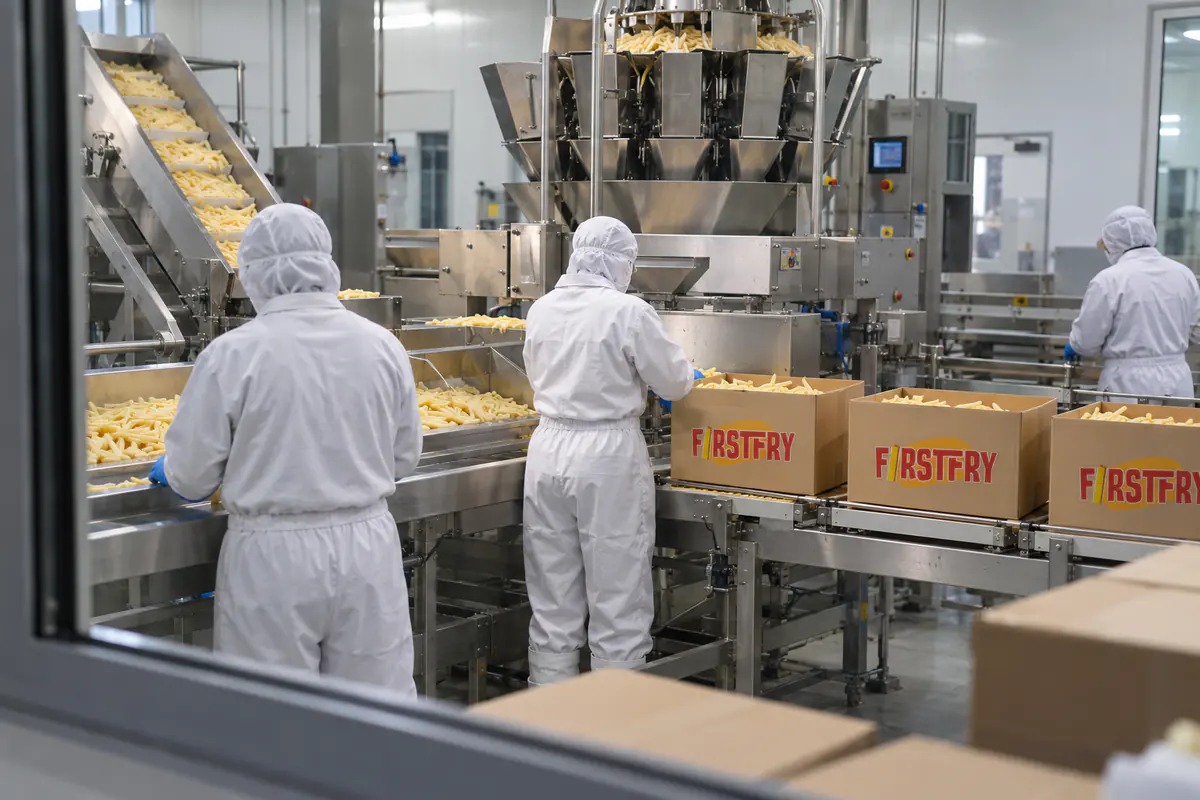
Korea is the East Asian market where sequencing matters most, because one requirement sits genuinely upstream of everything else. The overseas manufacturing facility that produces the food must be registered with MFDS before the food is exported to Korea. Not before it is sold. Before it is exported.
An exporter who negotiates a price, agrees terms and books a vessel before that registration exists has built a schedule on a foundation that is not there. It is the single most common way an otherwise well-run Korean opening slips a quarter.
Step 1 — Overseas facility registration
Registration is of the manufacturing facility, submitted to MFDS, and is generally initiated with the involvement of the Korean importer. It identifies the plant, its address, the foods it produces for the Korean market and the responsible parties. It is a prerequisite for the import declaration to be accepted.
Two practical points. First, registration is facility-scoped and food-scoped, so adding a materially different product later is not automatically covered by an existing entry. Second, the details must match what appears elsewhere — on the health certificate, the invoice, the packing list and the label. A plant address written one way in the registration and another way on the certificate is a discrepancy, and discrepancies are what inspection regimes are built to find.
Step 2 — The import declaration and inspection
Each consignment is declared to MFDS through the regional office handling the port of entry. The declaration may be cleared on documents, or selected for sensory inspection, or for laboratory testing against Korean Food Code parameters. As in Japan, history matters: an established compliant flow attracts less testing than a first arrival, and a failure attracts a great deal more for a long time afterwards.
Where laboratory inspection is ordered, the consignment waits. Budget for that on a first shipment rather than promising a delivery date that assumes document clearance, and make sure the importer understands who bears the storage cost during the wait before it happens rather than after.
Step 3 — Korean Food Code conformity
The Korean Food Code sets standards and specifications by food category, covering compositional requirements, permitted additives, contaminant limits, pesticide residues and microbiological criteria. Conformity is assessed against the Korean text, not against an equivalent standard from another market.
- Confirm the food category your SKU falls into, because the specification set follows from it
- Check every additive in the coating and seasoning against Korean permissions and use levels
- Check pesticide residues against Korean limits for potato, including storage treatments
- Confirm microbiological criteria and the sampling basis your laboratory reports against
- Verify the frying oil and any processing aid against the same code
As with Japan, coated and seasoned SKUs carry more risk than plain cuts, because a coating system is a collection of additives that were formulated for a different regulatory market. Review it component by component with the coating supplier before offering the SKU.
| Item | Who does it | When |
|---|---|---|
| Overseas facility registration with MFDS | Manufacturer, with the importer | Before export — the upstream gate |
| Food Code conformity assessment | Manufacturer and importer | Before quoting a firm price |
| Korean label artwork | Importer, from your data | Before production is scheduled |
| Import declaration | Importer | Per consignment, at entry |
| Laboratory inspection, if ordered | MFDS | After arrival, at the importer's cost of time |
| CEPA origin certificate | Exporter | With the shipping documents |
Step 4 — Korean labelling
Labels for the Korean market are in Korean and carry the mandatory set: product name, food type, importer name and address, manufacturing plant, date marking, net content, ingredients, additives, allergens, nutritional information where required and storage instructions. The importer appears as the party responsible in Korea.
Korean allergen labelling has its own list and is not interchangeable with the Japanese, EU or US lists. Build the label inside the Korean system rather than translating an existing one, and settle it before the plate change rather than after production is booked.
Step 5 — Tariff and CEPA
Frozen potatoes prepared or preserved otherwise than by vinegar or acetic acid classify in heading 2004.10. Korea applies duty on frozen potato products and the India-Korea Comprehensive Economic Partnership Agreement is in force, so a preferential claim is worth investigating rather than assuming away.
Confirm against the agreement's own schedule whether the relevant line is covered and on what basis, and confirm the origin criteria your product must satisfy. Where preference applies, the certificate of origin is a commercial document rather than an administrative one, and the process for issuing it should be settled before the first shipment.
What to send with a first Korean quotation
- Plant details exactly as they will appear on the MFDS registration and every downstream document
- Specification per SKU with a complete additive declaration including carry-over
- Residue and microbiological results referenced to Korean Food Code parameters
- Ingredient, additive and allergen data structured for a Korean label
- Origin documentation ready for a CEPA preference claim if one applies
Frequently asked questions
Do we need MFDS registration before exporting frozen fries to Korea?
Yes. The overseas manufacturing facility must be registered with the Ministry of Food and Drug Safety before the food is exported to Korea, and the registration is normally initiated with the Korean importer. It is a prerequisite for the import declaration, which makes it the first item on the critical path rather than a step to complete in parallel.
How is a Korean import declaration different from a Japanese notification?
The mechanics are similar — a per-consignment filing that may be cleared on documents or selected for inspection — but Korea additionally requires the overseas facility to be registered before export, which Japan does not. In practice that moves the Korean critical path several weeks upstream of the equivalent Japanese one.
Does an existing GFSI certificate satisfy Korean requirements?
It helps with the importer's own due diligence but it does not substitute for conformity with the Korean Food Code, which sets its own standards and specifications by food category. Assess your product against the Korean text directly. A certificate demonstrates that a system exists; the Food Code decides whether this particular product may be sold.
Are coated fries riskier than plain cuts for Korea?
Generally yes, for the same reason as in Japan. A coating system is a set of additives formulated for whichever market it was designed around, and Korean permissions and use levels are assessed independently. Review the coating component by component with the coating supplier before offering a coated SKU rather than after a consignment is tested.
Opening South Korea?
Send us the SKUs and we will return the plant details in the form MFDS registration needs, plus the specification and additive declaration your importer requires to assess Korean Food Code conformity.
Email BuyFry@FirstFryFoods.com or request a quote. The export desk replies within one business day.