Importing Frozen Fries into South Africa: Anti-Dumping Duties and Local Competition
South Africa is unusual among frozen fry markets because trade remedies, not just tariffs, shape origin economics. The International Trade Administration Commission has imposed anti-dumping duties on frozen potato chips originating in Belgium, Germany and the Netherlands, reported at rates ranging from single digits to well over 200%. That materially changes the landed-cost comparison between European and non-European origins for South African importers.
Published 2026-07-27, updated 2026-07-31 · FirstFry Export Desk · Importing, duties & compliance
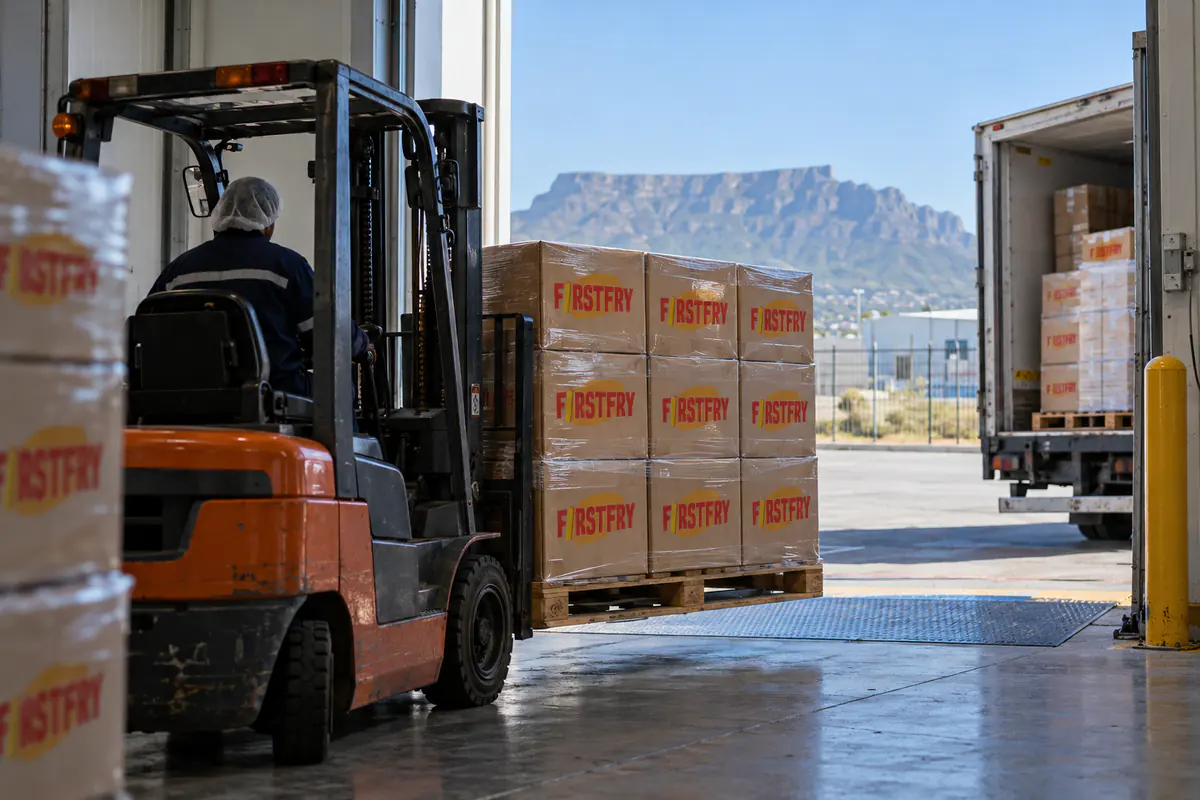
Every other market in this series is a compliance story. South Africa is a trade-policy story. The country has a substantial domestic potato processing industry, and that industry has successfully pursued anti-dumping action against European frozen chip imports.
For a South African importer that is the most consequential fact on the page, and it is worth understanding properly rather than as a talking point.
What the anti-dumping duties actually are
The International Trade Administration Commission investigated frozen potato chip imports from the European Union and found the domestic industry was materially harmed through price undercutting, declining sales volumes and lost production. Following that investigation, duties were imposed on imports originating in Belgium, Germany and the Netherlands, reported in trade coverage at rates spanning from single digits to well over 200% depending on origin country, and applying for a multi-year period.
What it means for origin choice
An anti-dumping duty is applied on top of ordinary customs duty and is origin-specific. Where one is in force against particular European origins, the landed-cost arithmetic between European and non-European supply is not marginally different — it is structurally different.
| Cost line | EU origin into South Africa | Non-EU origin |
|---|---|---|
| Ex-works price | Competitive | Competitive |
| Ocean freight | Long haul from Northern Europe | Shorter from the Indian west coast |
| Ordinary customs duty | Applies | Applies |
| Anti-dumping duty | Applies where the measure covers that origin | Not applicable |
| Net effect | Can be decisive against the shipment | Unaffected by the remedy |
This is why South Africa is the one market where the origin question is worth settling before the supplier question. The general arithmetic of that comparison is in the Indian versus European landed-cost comparison; South Africa is the case where a trade remedy amplifies it.
The competitive picture, stated fairly
A duty advantage is not a market position. South Africa has a real domestic industry producing frozen chips, and an importer's competition is that industry, not only other importers.
- Local product has no freight leg and no import duty — it will always have a structural cost advantage on the base line
- Imports compete on specification, consistency and availability, particularly for cuts or grades local supply does not prioritise
- Seasonality and local crop conditions move the domestic price, which changes the import window
- The QSR and foodservice segment is where specification consistency is valued most highly
- A trade remedy against one origin does not remove domestic competition — it removes one competing origin
The honest read: South Africa rewards an importer with a clear specification proposition and a reliable supply line, and it punishes anyone whose only argument is price.
Regulatory and port requirements
Alongside the tariff position, the ordinary import controls apply and should be confirmed with a licensed South African clearing agent, because responsibilities are split across more than one authority.
| Item | Why it matters | Confirm with |
|---|---|---|
| Import permit requirements for the product | Determines whether a permit is needed at all | The relevant national department |
| Port health inspection requirements | Imported foodstuffs are inspected on entry | Port health authority via your agent |
| Labelling requirements | South African food labelling rules are prescriptive | Clearing agent or a labelling consultant |
| Tariff line and ordinary duty | The base rate before any remedy | SARS, via a licensed agent |
| Anti-dumping applicability | Origin-specific, and reviewable | ITAC and SARS |
| Cold-chain and transport standards | Frozen transport conditions are regulated | Clearing agent |
Classification is the starting point for all of it — par-fried frozen fries sit under HS heading 2004.10, and the reasoning is in the classification guide for par-fried potato. Get the tariff line confirmed before anything else, because both the ordinary duty and any remedy attach to it.
Cold chain and routing
- Set point −18 °C stated on the bill of lading
- Container pre-cooled before loading
- Direct sailing where available — India to South Africa is a longer leg than the Gulf, so transhipment discipline matters more
- Data logger fitted, readout released on arrival
- Reefer plug-in pre-arranged at Durban, Cape Town or your port of entry
- Production date printed on the carton, with a maximum age at loading agreed in the purchase terms
Supplying from India
FirstFry manufactures in Morbi, Gujarat and loads through Mundra and Kandla. For a South African programme the useful conversation is specification and consistency rather than headline price, because that is where imported product earns its place against domestic supply. Specifications for the whole frozen potato line-up are published so a buyer can compare like for like against local product, and most programmes open with a plain 9mm cut.
Frequently asked questions
Are there anti-dumping duties on frozen fries in South Africa?
The International Trade Administration Commission has imposed anti-dumping duties on frozen potato chips originating in Belgium, Germany and the Netherlands, following an investigation that found material harm to the domestic industry. Trade coverage reported rates ranging from single digits to well over 200% depending on origin. Anti-dumping measures are reviewable and this one has lapsed and been revived before, so confirm the current position with ITAC and SARS.
How do anti-dumping duties change the origin decision?
An anti-dumping duty is origin-specific and applies on top of ordinary customs duty, so where a measure covers particular European origins the landed-cost gap between European and non-European supply becomes structural rather than marginal. It makes settling the origin question worthwhile before the supplier question for South African buyers.
Does a duty advantage mean imports beat local product?
No. Domestic South African frozen chip production carries no freight leg and no import duty, so it retains a structural cost advantage on the base line. Imports compete on specification, consistency and availability — particularly cuts and grades local supply does not prioritise — and the market punishes an importer whose only argument is price.
What regulatory approvals does South Africa require for imported frozen fries?
Responsibilities are split across more than one authority, covering import permit requirements, port health inspection of imported foodstuffs on entry, prescriptive food labelling rules, and regulated conditions for frozen transport. Confirm the applicable set with a licensed South African clearing agent, and settle the tariff line first because both ordinary duty and any trade remedy attach to it.
How long is the shipping leg from India to South Africa?
Longer than the Gulf routes, which makes transhipment discipline and cold-chain monitoring more important rather than less. Specify a −18 °C set point on the bill of lading, name the routing on the booking rather than only the destination, fit a data logger per container and require the readout on arrival.
Comparing origins for South Africa?
Tell us your target specification and volume and we will quote on the Incoterm you choose, with the specification detail you need to compare like for like against domestic product — and the classification data your agent needs to confirm the duty position.
Email BuyFry@FirstFryFoods.com or request a quote. The export desk replies within one business day.