Importing Frozen Fries into Mexico: COFEPRIS, NOM-051 Warning Seals and the Importer Registry
Frozen fries enter Mexico under COFEPRIS sanitary control, with customs clearance requiring the importer to be listed in the Padron de Importadores. There is no per-SKU pre-registration for most processed foods, but labelling under NOM-051 is prescriptive: Spanish language, and front-of-pack octagonal warning seals where a product exceeds thresholds for calories, sodium, saturated fat or added sugars.
Published 2026-08-24 · FirstFry Export Desk · Importing, duties & compliance
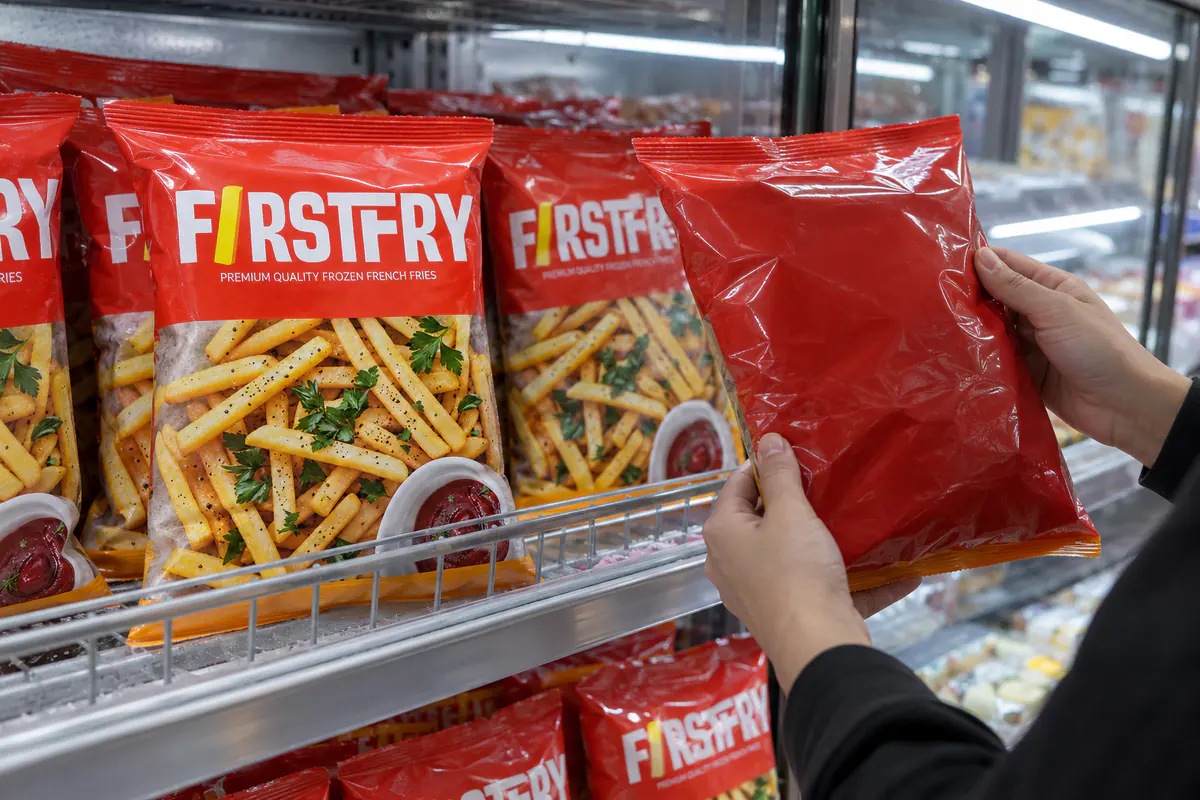
Mexico is a genuinely open market on paperwork and a genuinely demanding one on labels. The gate is not a registration queue. The gate is the front of your bag.
That inversion catches exporters who have learned the Gulf rhythm. There is no six-week wait for a SKU approval before you can quote. There is, instead, a labelling standard that can require a black octagonal warning seal on the principal display panel, and for a fried potato product that is a live question rather than a theoretical one.
Step 1 — The importer, the registry and the customs agent
Commercial imports are made by a Mexican entity registered in the Padron de Importadores, the federal importer registry administered by the tax authority. Certain goods sit on sector-specific registers as well. Your buyer either holds this or they do not, and it is the first thing to confirm, because it is the one prerequisite that cannot be fixed while a container waits.
Clearance runs through a Mexican customs agent. Frozen potatoes prepared or preserved otherwise than by vinegar or acetic acid classify under heading 2004.10, with the national tariff line and rate to be confirmed by the agent against the actual product. Ask whether any preferential treatment applies to Indian origin before you model landed cost.
Step 2 — NOM-051, and the octagon problem
NOM-051 is the general labelling standard for prepackaged food and non-alcoholic beverages in Mexico. It sets out what must appear, in Spanish, and in what form: common name, ingredient list, net content, allergen declaration, lot identification, date marking, and the name and address of the importer or responsible party.
The part that changes commercial outcomes is the front-of-pack system. Where a product exceeds defined thresholds for energy, sodium, saturated fat, trans fat or added sugars, it must carry black octagonal warning seals on the principal display panel — the EXCESO marks. They are large, they are mandatory, and they are designed to be noticed.
For frozen fries the practical questions are sodium and fat. Oil uptake and any applied seasoning drive both. This is one of the few markets where a specification decision made in Gujarat — a coating choice, a salt level, a target oil pickup — reaches directly through to how a retail pack looks on a Mexican shelf.
| Specification lever | What it moves | Why it matters in Mexico |
|---|---|---|
| Applied salt or seasoning | Sodium per 100 g | A sodium seal is the most commonly triggered mark on a savoury frozen product |
| Oil uptake at par-fry | Fat and energy per 100 g | Drives both the energy and saturated fat assessments |
| Frying medium | Saturated fat profile | Changes the saturated fat figure independently of total fat |
| Coating system | Fat pickup on final fry | Nutrition is declared on the product as sold, so the as-sold figure is what counts |
| Pack format | Retail versus foodservice | Foodservice bulk packs are not the same labelling case as a consumer pack |
Step 3 — Retail versus foodservice, decided early
The warning seal regime is built for consumer prepackaged food. A bulk pack going to a restaurant kitchen is a different labelling case from a bag going to a supermarket shelf. That distinction is worth settling before artwork, because it determines whether the octagon question arises at all.
For an Indian exporter opening Mexico, foodservice is usually the sensible first channel regardless. It shortens the artwork path, it puts the product in front of operators who judge on fry performance rather than shelf presence, and it defers the retail label investment until there is volume to justify it.
Step 4 — Cold chain and the long transit
Sailing from the Indian west coast to Mexican ports is a long routing, frequently with transhipment. Specify the container setpoint, require a data logger, and agree who reads it at discharge. Also agree what happens if the reefer plug time at a transhipment port cannot be evidenced, because that is where the gap usually appears.
- Setpoint stated on the booking and the bill of lading, not only in an email
- A logger in the container and a named person to download it on arrival
- Pre-agreed tolerance for a short excursion, so a minor event is not a rejection
- Carton and pallet specification that survives multiple handlings
- Lot codes legible after frost, which is a real and frequently ignored failure
What to send with a first Mexican quotation
- Specification per SKU with cut, coating, frying medium and target oil uptake
- Full nutritional data per 100 g as sold, so the seal assessment can be run before artwork
- Ingredient and allergen statements ready for translation into Spanish
- Certification pack and audit report
- A clear statement of whether the SKU is offered in retail or foodservice format
Frequently asked questions
Do frozen fries need COFEPRIS registration before import into Mexico?
Most processed foods do not require per-SKU pre-registration with COFEPRIS in the way Gulf markets require product registration. Sanitary control is exercised mainly at entry and in the market. The binding constraints in practice are the importer's registry status and full compliance with NOM-051 labelling, including front-of-pack warning seals where thresholds are exceeded.
Will our fries need a warning seal on the front of the pack?
It depends on the nutritional profile of the product as sold, principally sodium, energy and saturated fat. Applied seasoning and oil uptake are the two levers that most often push a savoury frozen product over a threshold. Run the assessment on real analytical data for the exact SKU before artwork is commissioned, not on a generic figure.
Can we avoid the labelling question by selling foodservice first?
Largely, yes. The front-of-pack seal regime is aimed at consumer prepackaged food, so a bulk pack going to a kitchen is a different case from a retail bag. For a first entry that is usually the sensible route: it shortens the artwork path and puts the product in front of operators judging fry performance rather than shelf presence.
What language must the Mexican label be in?
Spanish. Mandatory information under NOM-051 must appear in Spanish, and the responsible party in Mexico must be identified on the label. A label can carry other languages in addition, but the Spanish content is what satisfies the standard, and the importer's details are part of it rather than an optional addition.
Quoting a Mexican buyer?
Send us the SKUs and channel and we will return the specification with full as-sold nutritional data, so your labelling consultant can run the NOM-051 seal assessment before anyone commissions artwork.
Email BuyFry@FirstFryFoods.com or request a quote. The export desk replies within one business day.