Importing Frozen French Fries into the USA: FSVP, Prior Notice and FDA Registration
Frozen french fries enter the United States under FDA jurisdiction. The foreign manufacturing facility must hold a current FDA food facility registration with a US agent, and the US importer must operate a Foreign Supplier Verification Program covering that supplier. Prior notice is filed before arrival, and entry is made to CBP under HTS heading 2004.10. There is no per-SKU product registration.
Published 2026-08-22 · FirstFry Export Desk · Importing, duties & compliance
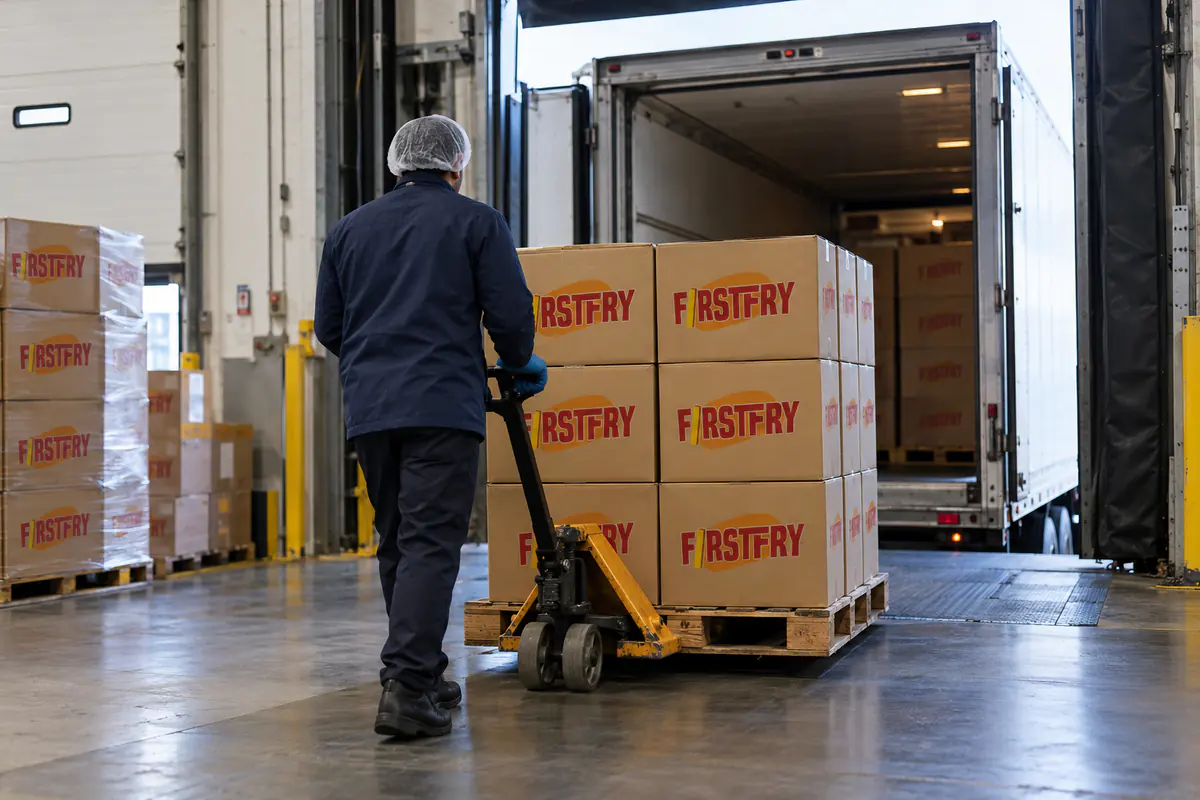
The United States is the market Indian exporters most often assume is closed and most often misread. It is not closed, and it is not gated by a registration queue. What it does instead is push the verification burden onto the buyer, which means the questions in a serious American enquiry look nothing like the questions in a Gulf one.
A Gulf importer asks whether your SKU is registered. An American importer asks for your food safety plan, your hazard analysis, your audit certificate and the name of the person at your plant who signs off on corrective actions. They are not being difficult. Under the Foreign Supplier Verification Program they are personally on the hook for having asked.
Step 1 — FDA food facility registration
Any facility that manufactures, processes, packs or holds food for consumption in the United States must be registered with FDA. That includes a plant in Gujarat. Registration is free, is done electronically, and must be renewed on a biennial cycle — a lapsed registration is one of the more common reasons a consignment is refused at the border for a reason that had nothing to do with the food.
A foreign facility must also designate a US agent: a person or company physically in the United States who is the point of contact for FDA communications and who FDA can reach during business hours. Many importers will offer to act as your US agent. That is convenient and it is also a dependency, because if the relationship ends your registration needs updating before the next shipment.
Step 2 — FSVP, and why it lands on your buyer
The Foreign Supplier Verification Program is the part exporters underestimate. It requires the US importer — a person or entity in the United States, with a DUNS number, identified on the entry filing — to verify that each foreign supplier produces food in a manner that provides the same level of public health protection as US preventive controls, and that the food is not adulterated or misbranded for allergens.
In practice, verification of a supplier producing a food with an identified hazard requiring a control normally means an annual onsite audit, or a documented justification for a different verification activity. Your importer will ask for whichever evidence lets them close that file. Supplying it quickly is the single biggest lever you have on how fast a US relationship moves.
- A GFSI-benchmarked certificate — FSSC 22000 or BRCGS — with the audit report, not just the certificate face
- Your HACCP or food safety plan, including the hazard analysis for the fry process
- Process validation for the blanch and par-fry steps
- Allergen controls — for coated fries, the coating specification matters here
- Corrective action and complaint history, which a thorough importer will ask for
Step 3 — Prior notice and customs entry
Prior notice of imported food must be submitted to FDA before the shipment arrives, within the timeframe set for the mode of transport. It is normally filed by the importer or their broker through the FDA system or alongside the customs entry. Getting it wrong delays release; omitting it can mean refusal of admission.
Customs entry is separate and is made to CBP. Frozen potatoes prepared or preserved otherwise than by vinegar or acetic acid sit in heading 2004.10. The full ten-digit line and its duty rate depend on the exact preparation and pack, and a US customs broker should confirm it against the actual product rather than against the heading.
| United States | Typical GCC market | |
|---|---|---|
| What is approved | Nothing is pre-approved | The product, and often the facility |
| Who carries the burden | The US importer, under FSVP | The exporter, through registration |
| Registration | Facility, biennial, free | Per SKU, fee-bearing, queued |
| Critical path before first shipment | The importer's verification file | The product registration queue |
| Per-consignment filing | Prior notice plus CBP entry | Consignment clearance documents |
| What decides your speed | How fast you answer an audit request | How early you started registering |
Step 4 — Labelling for the US shelf and the US kitchen
Retail packs carry a Nutrition Facts panel in the current US format, an ingredient statement in descending order of weight, allergen declaration under FALCPA, net quantity in both US customary and metric units, and the name and place of business of the manufacturer, packer or distributor. Country of origin marking applies at customs.
Bulk foodservice packs destined for a kitchen rather than a shelf are treated differently from retail units, but they still carry ingredient and allergen information, and a distributor who repacks assumes labelling responsibility. Confirm which of the two you are actually supplying before the artwork is set, because the two label sets are not interchangeable and the reprint cost lands on whoever guessed.
What to send with a first US quotation
Send the specification, the certificate and the plan, and send them unprompted. An American buyer comparing two Indian suppliers will not choose on price alone when one of them made the FSVP file easy to close and the other sent a price list.
- Full product specification per SKU, including cut, coating, oil and pack format
- GFSI certificate, audit report and current scope
- Nutritional and allergen data in a format a US labeller can use directly
- FDA registration number and the name of your US agent
- A specimen document set so the broker can check the entry format before a live shipment
Frequently asked questions
Does the FDA approve frozen french fries before import?
No. FDA does not approve individual food products before import. The facility registers, the importer runs a Foreign Supplier Verification Program, and prior notice is filed before arrival. There is no per-SKU registration queue of the kind used in Gulf markets, which is why a US market entry is gated by your buyer's verification file rather than by a government approval.
Who is responsible for FSVP, the exporter or the importer?
The importer. FSVP obligations fall on the US-based entity that owns the food at entry or, where there is none, the US owner or consignee. As the foreign supplier you cannot hold an FSVP yourself, but you supply almost all of the evidence in it, so how quickly you respond directly sets how quickly your buyer can complete it.
What HTS code applies to frozen french fries in the United States?
Frozen potatoes prepared or preserved otherwise than by vinegar or acetic acid classify in heading 2004.10. The full ten-digit statistical line and its duty rate depend on the preparation and pack, so have a licensed US customs broker confirm it against the actual product specification rather than assuming a line from the heading alone.
Do we need a US agent if we already have an importer?
Yes. The US agent is a registration requirement for the foreign facility and is a separate role from the importer, even when the same company performs both. Keep the designation current: an out-of-date US agent on a food facility registration is a paperwork failure that surfaces at the worst possible moment, which is at the port.
Quoting a US buyer?
Tell us the SKUs and pack format and we will send the specification, nutritional and allergen data your importer needs for labelling, plus our certification pack in the form an FSVP qualified individual can file directly.
Email BuyFry@FirstFryFoods.com or request a quote. The export desk replies within one business day.